
Beyond Autopilot
Tikkun Leil Shavuot Reader for Teens

Share
Fuelling our Inner Fire to Change the World
This study guide is dedicated to the success of the soldiers of the Israel Defense Forces and the entire People of Israel, both in the Land of Israel and abroad, with a prayer for the elevation of the honour and stature of Israel throughout the world.
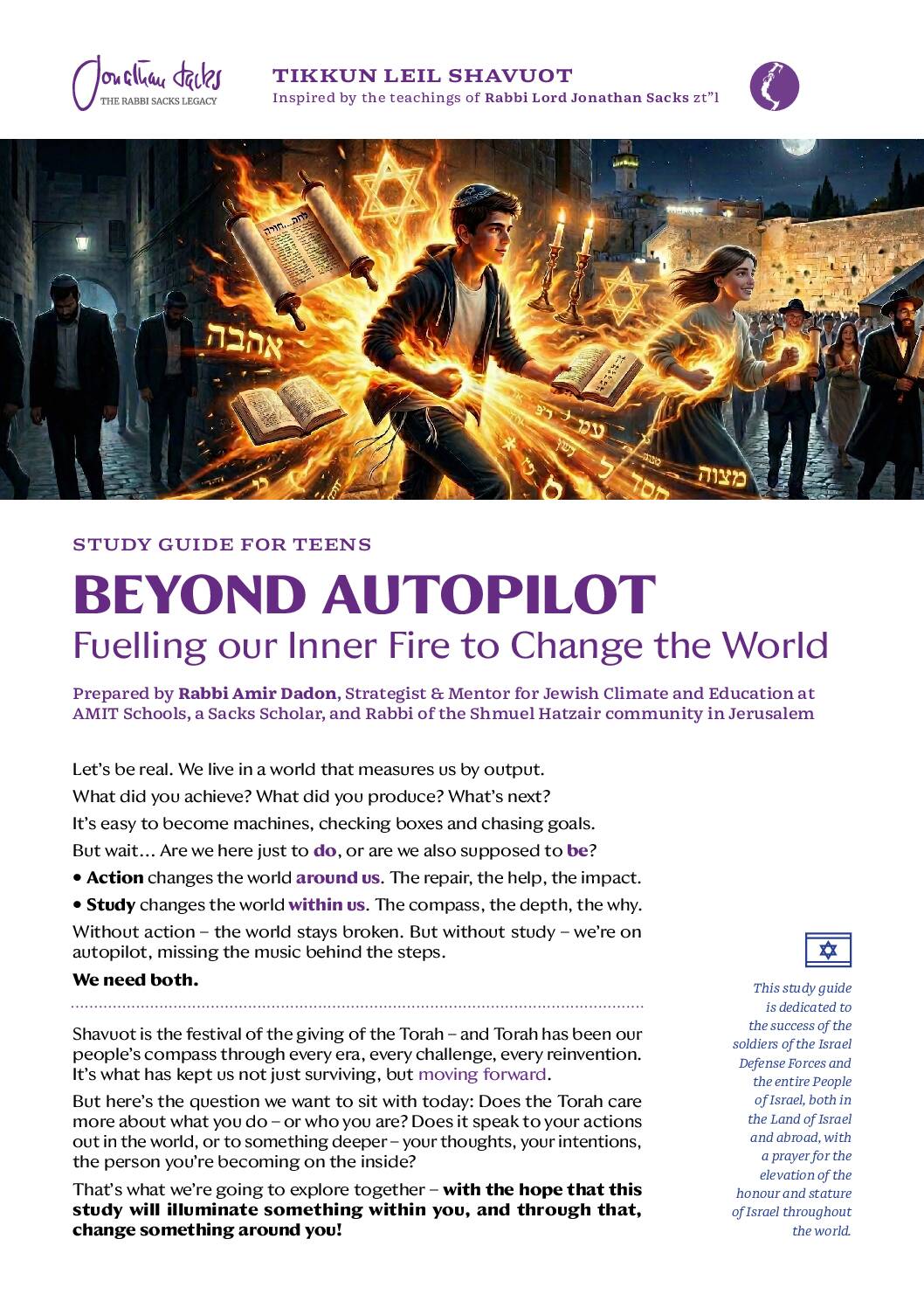
Let’s be real. We live in a world that measures us by output. What did you achieve? What did you produce? What’s next? It’s easy to become machines, checking boxes and chasing goals.
But wait… are we here just to do, or are we also supposed to be?
- Action changes the world around us. The repair, the help, the impact.
- Study changes the world within us. The compass, the depth, the why.
Without action – the world stays broken. But without study – we’re on autopilot, missing the music behind the steps. We need both.
Shavuot is the festival of the giving of the Torah – and Torah has been our people’s compass through every era, every challenge, every reinvention. It’s what has kept us not just surviving, but moving forward.
But here’s the question we want to sit with today: Does the Torah care more about what you do – or who you are? Does it speak to your actions out in the world, or to something deeper – your thoughts, your intentions, the person you’re becoming on the inside?
That’s what we’re going to explore together – with the hope that this study will illuminate something within you, and through that, change something around you!
Let’s begin. Examine the pictures below:

- What does each one express, and what are the benefits?
- Which is greater: learning or doing? Why?
Study the following quote together:
Source 1:
וּכְְבָָר הָָיָָה רַַבִִּי טַַרְְפוֹן וּזְְקֵֵנִִים מְְסוּבִִּין בַַּעֲֲלִִיַַּת בֵֵּית נַַתְְּזָָה בְְּלוֹד. נִִשְְׁאֲֲלָָה שְְׁאֵֵילָָה זוֹ בִִּפְְנֵֵיהֶֶם: תַַּלְְמוּד גָָּדוֹל אוֹ מַַעֲֲשֶֶׂה גָָּדוֹל? נַַעֲֲנָָה רַַבִִּי טַַרְְפוֹן וְְאָמַַר: מַַעֲֲשֶֶׂה גָָּדוֹל. נַַעֲֲנָָה רַַבִִּי עֲֲקִִיבָָא וְְאָמַַר: תַַּלְְמוּד גָָּדוֹל. נַַעֲֲנוּ כּוּלָָּם וְְאָמְְרוּ: תַַּלְְמוּד גָָּדוֹל, שֶֶׁהַַתַַּלְְמוּד מֵֵבִִיא לִִידֵֵי מַַעֲֲשֶֶׂה.
Rabbi Tarfon and the Elders were reclining in the loft of the house of Nit’za in Lod, when this question was asked of them: Is study greater or is action greater? Rabbi Tarfon answered and said: Action is greater. Rabbi Akiva answered and said: Study is greater. Everyone answered and said: Study is greater, as study leads to action.
Kiddushin 40b

Points to Ponder
- Why does Rabbi Tarfon believe that action (ma’aseh) is greater?
- Why does Rabbi Akiva insist that study (talmud) is greater?
Note the surprising conclusion: Study is greater because it leads to action. In other words, while action is the ultimate goal, study is the only way to reach it correctly.

Discussion
- Does this principle surprise you? Do you find that when you understand a mitzvah, you are more likely to act upon it?
Let us examine the Rambam’s legal ruling on this issue:
Source 2:
הָָיָָה לְְפָָנָָיו עֲֲשִִׂיַַּת מִִצְְוָָה וְְתַַלְְמוּד תּוֹרָָה. אִִם אֶֶפְְשָָׁר לַַמִִּצְְוָָה לְְהֵֵעָָשׂוֹת עַַל יְְדֵֵי אֲֲחֵֵרִִים לֹאֹ יַַפְְסִִיק תַַּלְְמוּדוֹ, וְְאִִם לַַאו – יַַעֲֲשֶֶׂה הַַמִִּצְְוָָה וְְיַַחְְזֹרֹ לְְתַַלְְמוּדוֹ.
When a person is confronted with the performance of a mitzvah and the study of Torah: If the mitzvah can be performed by another individual, he should not interrupt his studies. If not, he should perform the mitzvah, and then return to his studies.
Mishneh Torah: Hilchot Talmud Torah 3:4
Points to Ponder
- In a case where a mitzvah can be how ,(עַַל יְְדֵֵי אֲֲחֵֵרִִים) fulfilled by others does the Rambam direct us to weigh the profound sanctity of Talmud Torah against the immediate merit of a ma’aseh?
Conclusion
Study is the supreme value, but it can never come at the expense of a mitzvah that is “time-sensitive” (an opportunity that will pass) and has no one else to perform it.
Learning is not meant to be a detached “ivory tower”.
Source 3:
Watch the video >
Let’s look at the teachings of Rabbi Sacks on this issue:
Every mitzvah is a miniature act of redemption. It turns something secular into something holy. When we keep kashrut, we turn food for the body into sustenance for the soul. When we keep Shabbat we sanctify time, making space in our life to breathe and give thanks, celebrating what we have instead of striving for what we do not yet have. When we observe the festivals we sanctify history by turning it into personal memory, forging a connection between our ancestors’ past and our present. When we keep the laws of taharat hamishpacha, family purity, we turn a physical relationship into a sacred bond of love.
The mitzvot bring God into our lives through the intricate choreography of a life lived in accordance with God’s will. They are the poetry of the everyday, turning life into a sacred work of art.
rabbisacks.org/curriculum-resources/ten-paths-to-god/unit-4-mitzvot (01:56)
Discussion
In Western culture, we are often told that to be happy, we need a “new version” of everything – a better phone, a new aesthetic, or more followers. Rabbi Sacks says that Shabbat is about “celebrating what we have instead of striving for what we do not yet have.”
Is it possible that our constant “striving” in the Western world is actually what makes us miserable? How does keeping a mitzvah like Shabbat act as a “rebellion” against a world that always wants us to want more, and actually is a much more efficient way for achieving calmness and rest?
Through the insights of Rabbi Sacks, we’ll explore the relationship between that inner world and our outer one – and maybe discover how to bring more of ourselves into the way we act.
We’ll look at three areas of Jewish life – Prayer, Shabbat, and Tzedaka – and ask: where does the inner meet the outer?
Rabbi Sacks on Prayer
Discussion
What do you think is better: to pray only when I feel I can truly focus (kavanah), or to persevere and pray every day, even when I’m exhausted and completely unable to pay attention to the words coming out of my mouth?
Source 4:
Let’s look at what Rabbi Sacks has to say on this matter:
Watch the video >
Prayer is to the human spirit what physical exercises is to the human body.
I try to do my 10,000 steps a day. I don’t always succeed but I feel bad when I don’t, because I know that with my sedentary lifestyle, if I don’t exercise – all sorts of things will go wrong: I’ll put on weight, my muscles will grow weak, my blood pressure will rise and my life expectancy will decline. I’ll lose years from my life and life from my years.
And yes, 10,000 steps on a treadmill can sometimes be pretty boring but you do it because you know what will happen if you don’t. The same is true of prayer, it’s just that we don’t have the same kind of precise measurement for the spirit that we do for the body – it’s not easy to quantify the feelings of happiness, fulfilment, meaning, gratitude, pleasure, delight and joy, but they make a difference! In fact, they make ALL the difference to the sense of blessedness of a life well-lived.
The spirit needs prayer the way the body needs exercise. And sometimes prayer can be boring the way exercise can be boring, but you do it because you know that it’s going to make you feel more energized, focused, revitalized. It’s going to make you a better, larger and deeper human being.
rabbisacks.org/videos/spiritual-exercise (0:15)
Discussion
According to Rabbi Sacks, prayer is to the soul what exercise is to the body. You may not always feel like doing it, but it changes you over time.
- Share with each other one prayer that is especially memorable to you – the kind of prayer that gives you great strength!
- Would you have given up on that prayer if you had been exhausted?
Rabbi Sacks on Shabbat
Discussion
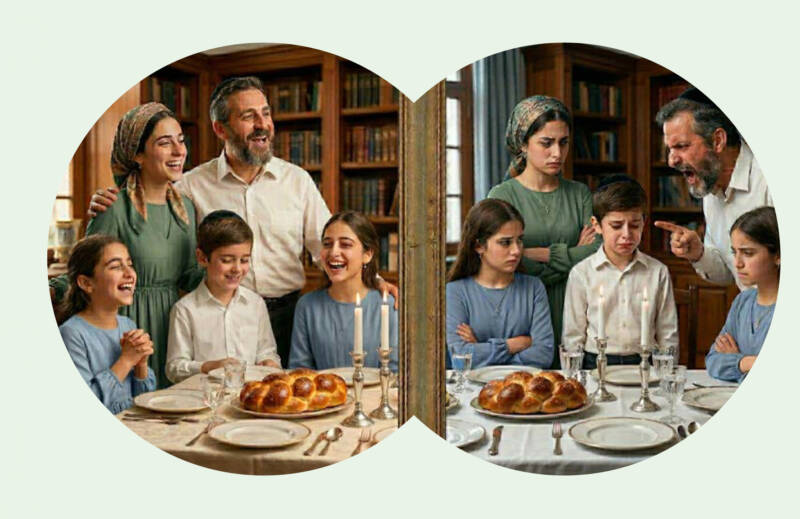
There are many laws regarding Shabbat. To keep Shabbat properly, one must learn a great deal, and it is very important! Sometimes we are so focused on the laws of Shabbat and on “doing it right” – what is permitted and what is forbidden – that we don’t notice how we are keeping Shabbat.
Have you ever stopped to notice what kind of atmosphere we bring into our Shabbat? If an alien were to land and see us in the middle of Shabbat, would they see someone who is joyful and connected to what they are doing, or would they see someone just waiting for Shabbat to end?!
- Share with each other one prayer that is especially memorable to you – the kind of prayer that gives you great strength!
- Would you have given up on that prayer if you had been exhausted?
Source 5:
Let’s see a personal story Rabbi Sacks once told, about the way to observe Shabbat:
I was sitting one day with the then-Chief Rabbi of Israel, Rabbi Avraham Shapira, and he told me a fascinating story about two Gedolai Hador, two great Torah Sages of the 19th century, one of whose children stayed firm and within the faith and became great Rabbis themselves, the other of whom, sadly, his children became disillusioned and left the fold.
And he said to me, the difference had to do with se’udah shlishit. The two Gedolim conducted se’udah shlishit completely differently. One of them gave a brilliant and very complex Dvar Torah; the other one sang zemirot and niggunim. He said, “Guess which one’s children stayed within the faith?”
It’s not a tough one. The one that sang the music kept their children with it, he kept his children within the faith.
rabbisacks.org/videos/being-an-inspiring-parent-principle-5
Points to Ponder
- Inspired by Rabbi Sacks, how can we bring more meaning to our religious practices?
- Have you ever seen Shabbat being kept in a way that truly inspired you?
- Think of one event or practice within the Jewish lifestyle where you feel the way it is performed – the specific form it takes – holds significant meaning.
- What is a custom you have at home on Shabbat that you would recommend to others, in order to upgrade their Shabbat experience?
Rabbi Sacks on Tzedakah
Now let’s look at a mitzvah between people – Tzedakah.
It seems simple: you give some money, done. But Halacha actually ranks Tzedakah across multiple levels – categorising not just what you give, but the inner world behind the giving.
Source 6:
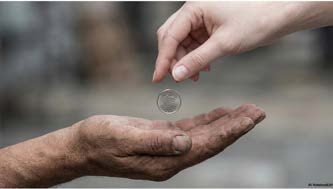
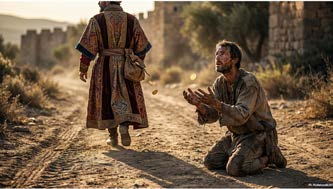
Take a look at the Rambam’s levels below, then see if you can match each picture to the right one!
שְְׁמוֹנֶֶה מַַעֲֲלוֹת יֵֵשׁ בַַּצְְּדָָקָָה¨ זוֹ לְְמַַעְְלָָה מִִזּוֹ
There are eight levels in charity, each level surpassing the other:מַַעֲֲלָָה גְְּדוֹלָָה שֶֶׁאֵֵין לְְמַַעְְלָָה מִִמֶֶּנָָּה – זֶֶה הַַמַַּחְְזִִיק בְְּיַַד יִִשְְׂרָָאֵֵל שֶֶׁמָָּךְְ¨ וְְנוֹתֵֵן לוֹ מַַתָָּנָָה אוֹ הַַלְְוָָאָה…
The highest level beyond which there is none is a person who supports a Jew who has fallen into poverty by giving him a present or a loan…פָָּחוּת מִִזֶֶּה – הַַנּוֹתֵֵן צְְדָָקָָה לָָעֲֲנִִיִִּים¨ וְְלֹאֹ יָָדַַע לְְמִִי נָָתַַן¨ וְְלֹאֹ יָָדַַע הֶֶעָָנִִי מִִמִִּי לָָקַַח¨ שֶֶׁהֲֲרֵֵי זוֹ מִִצְְוָָה לִִשְְׁמָָהּ…
A lower level than this is one who gives charity to the poor without knowing to whom he gave and without the poor person knowing from whom he received. For this is an observance of the mitzvah for its sake alone…פָָּחוּת מִִזֶֶּה – שֶֶׁיָָּדַַע הַַנּוֹתֵֵן†לְְמִִי יִִתֵֵּן¨ וְְלֹאֹ יָָדַַע הֶֶעָָנִִי מִִמִִּי לָָקַַח…
A lower level than that is an instance when the giver knows to whom he is giving, but the poor person does not know from whom he received…פָָּחוּת מִִזֶֶּה – שֶֶׁיָָּדַַע הֶֶעָָנִִי מִִמִִּי נָָטַַל¨ וְְלֹאֹ יָָדַַע הַַנּוֹתֵֵן…
A lower level than that is an instance when the poor person knows from whom he took, but the donor does not know to whom he gave…פָָּחוּת מִִזֶֶּה – שֶֶׁיִִּתֵֵּן לֶֶעָָנִִי בְְּיָָדוֹ קֹדֶֶֹם שֶֶׁיִִּשְְׁאַל
A lower level than that is giving the poor person in his hand before he asks.פָָּחוּת מִִזֶֶּה – שֶֶׁיִִּתֵֵּן לוֹ אַחַַר שֶׁיִֶּשְְִׁאַל.
A lower level than that is giving him after he asks.פָָּחוּת מִִזֶֶּה – שֶֶׁיִִּתֵֵּן לוֹ פָָּחוֹת מִִן הָָרָָאוּי בְְּסֵֵבֶֶר פָָּנִִים יָָפוֹת.
A lower level than this is giving him less than what is appropriate, but with a pleasant countenance.פָָּחוּת מִִזֶֶּה – שֶֶׁיִִּתֵֵּן לוֹ בְְּעֶֶצֶֶב.
A lower level than that is giving him with sadness.Mishneh Torah: Hilchot Matnot Aniyim 10:7-15






Discussion
The common denominator of all these laws is not the external action, but rather the internal intention (kavanah) within the act!
This means that even if two people perform the exact same action, it is possible that one has performed the mitzvah of Tzedakah at its highest level, while the other has performed it at its lowest.
And what does this depend on? The internal intention – the inner world. How vital the inner world truly is!
Points to Ponder
How is it that specifically this halacha, requiring even a poor person to give charity, is what teaches us that basic human dignity is the very heart of the mitzvah of Tzedakah?
Rabbi Sacks teaches that at the heart of Tzedakah is a person’s inner world – the soul:
Source 7:
There’s a tiny little halacha in Hilchos Matnot Aniyim, the Jewish laws of charity, the Rambam brings it. And even if somebody’s so poor that "וַַאֲֲפִִלּוּ עָָנִִי הַַמִִּתְְפַַּרְְנֵֵס מִִן הַַצְְּדָָקָָה חַַיָָּב לִִתֵֵּן צְְדָָקָָה לְְאַחֵֵר" : it’s a weird halacha and it says they only live on the basis of charity, they have to give charity.
Why so? It’s a crazy law. The answer is because charity is not only material, it’s also psychological. The greatest gift is the ability to give. And if somebody’s so totally dependent on charity that they’re always receiving and never giving, they’re being denied a basic human dignity.rabbisacks.org/videos/being-an-inspiring-parent-13
Conclusion
What we do on the outside comes from who we are on the inside. The more we fuel ourselves through learning and Jewish identity, the more our actions naturally grow and gain real power.
To wrap things up, here’s something inspiring from the moment the Jewish people received the Torah – over 3,300 years ago:
Source 8:
…וַַיֹּאּמְְרוּ כֹּלּ אֲֲשֶׁרׁ דבֶּּר ה׳ נַַעֲֲשֶׂה וְְנִִמָׁשְָׁע
…They replied, “All that the Lord has spoken we shall do and we shall hear.”
Shemot 24:7
Points to Ponder
Why did the Jewish people say “We will do” (na’aseh) before “We will hear” (nishmah)? And why did our Sages praise them so much for that specific moment, for that specific statement?
The Rebbe of Modzitz, in his book Yisa Bracha, reveals a deep and unique layer behind this famous sequence:
Source 9:
“In Egypt, they had a burning passion in their hearts… but they couldn’t act on it because of the heavy burden of the exile. Their hands were tied; they couldn’t physically perform the mitzvot.”
In Egypt, the Jews were slaves. Their bodies were bound by bricks and mortar, unable to do what their souls longed for. Yet that inner fire did not fade. With every day of exile, the longing only grew stronger. Then freedom came, the chains fell away, and what followed was almost unstoppable:
“Therefore, when they came to receive the Torah and were finally free from foreign rule, they immediately rushed to say ‘We will do.’ This was the one thing their hearts had been longing for all this time.”
‘Yisa Bracha’, Parshat Mishpatim, Rabbi Shaul Yedidya Elazar Taub
When they finally became free, their passion was so intense and their hearts so full they couldn’t hold back. The action burst out on its own – no explanations needed, it couldn’t wait for “listening.”
Na’aseh before nishmah wasn’t a random moment. It was the explosion of a deep longing built through years of slavery. Let’s receive the Torah, learn it, and let it become part of who we are – so that from that inner strength, we go out and heal a fractured world.
- How strong is my inner Jewish fire?
- How can I fuel it to change the world?

Chag Sameach!
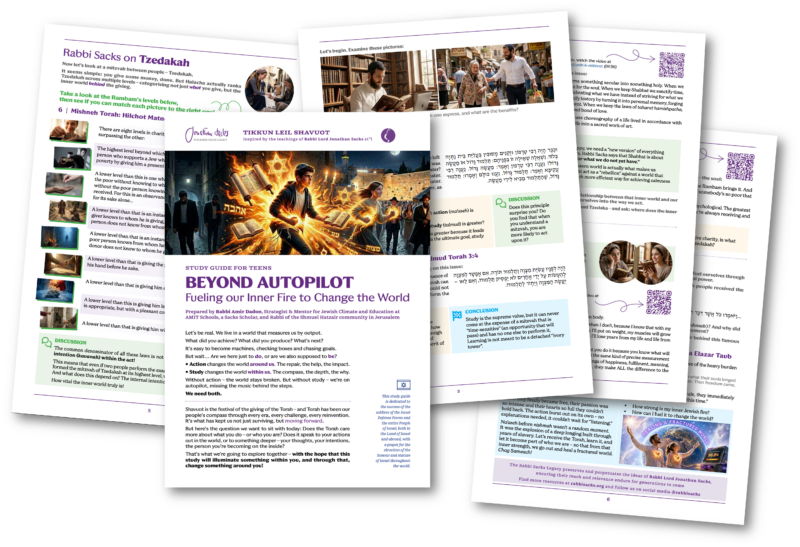
Prepared by Rabbi Amir Dadon, Strategist & Mentor for Jewish Climate and Education at AMIT Schools, a Sacks Scholar, and Rabbi of the Shmuel Hatzair community in Jerusalem
For further Shavuot materials for both students and adults, please visit our full range of Shavuot and Tikkun Leil resources.