
Rabbi Sacks on Avraham’s Silence and Protest
Share
This essay is one of the winning submissions to the Rabbi Sacks Essay Contest. Drawing on the teachings and writings of Rabbi Lord Jonathan Sacks zt”l, students were invited to reflect on contemporary questions through the lens of his ideas. This piece reflects the voice and perspective of its student author.
Author: Tali Morgenstern (Boyar International School, Israel) joint Third Place
“Who asked you to throw a soul into me?” exclaims Israeli singer and songwriter Hanan Ben Ari in his famous lament, “Ma Atta Rotze Mimeni” (“What Do You Want From Me”), where he articulates the deep human frustration with the relationship with the divine, blatantly challenging G-d, “all of the prayers, empty words. We kept quiet enough, now speak.”
Despite this harsh attack on G-d and expression of despair, Hanan remains a religious, shomer mitz’vot Jew. In another song, “Amen Al Hayeladim Sheli” (“Amen On My Children”) he begs G-d to protect his children and make sure “they will always be healthy,” raising a sharp self-contradiction. How can a religious man criticize G-d in one instance, but pray for His mercy in another? This is the exact question Rabbi Sacks attempts to answer in his analysis of Parshat Vayera – why does Avraham stay silent and leave the fate of his child in the hands of G-d, but before that, protest against Him to save innocent lives in Sodom?
Firstly, Rabbi Sacks explains in his essays that in ancient times, the concept of the individual was undeveloped, and people were defined by their family, with the male being the head, rather than their own personal being. For example, the term “patria potestas” was used in Roman times to describe the notion that the male head of the family had absolute legal authority over his descendants. In simpler words, children were the property of their parents.
However, this concept was challenged with the emergence of Abrahamic monotheism. As Sacks explains in his article “The Space Between Us,” because humans were created ‘b’tzelem Elokim,’ meaning as a projection of G-d, the individual was now given significance. This is emphasized in the tale of the Akeda, “A parent who truly loves their child makes space for the child to develop their own identity,” writes Sacks in his article “To Bless The Space Between Us.” Furthermore, in the article, he states that “We are not God. God is not us. It is the clarity of the boundaries between heaven and earth that allows us to have a healthy relationship with God.” In essence, Sacks shows that the Akeda was not meant to prove Abraham’s love for G-d, but rather to establish the notion of the individual.
A further interpretation Sacks offers for the Akeda is that it is a lesson in negative capability, or in simpler words, the ability to handle uncertainty. Generally, child sacrifice is harshly forbidden in Judaism, and so Avraham “would have proven himself no better than a pagan king.” (Negative Capability) Moreover, throughout the beginning of Bereshit, Avraham received multiple promises from G-d regarding children. For example, in Bereishit chapter 15, G-d tells Avraham that his descendants would be as numerous as the stars, and Avraham chooses to trust Him – when G-d tells Avraham to sacrifice his son, Avraham must show the same level of trust, even if G-d’s request seems illogical and contradictory at the moment. As Sacks writes, “The trial was to see whether Avraham could live with what seemed to be a clear contradiction between God’s word now, and God’s word on five previous occasions.” (“Negative Capability”) This story acts as a message for all future generations to come: place trust in G-d’s promises. Even if nothing seems reasonable at the moment, G-d will always keep His promises.
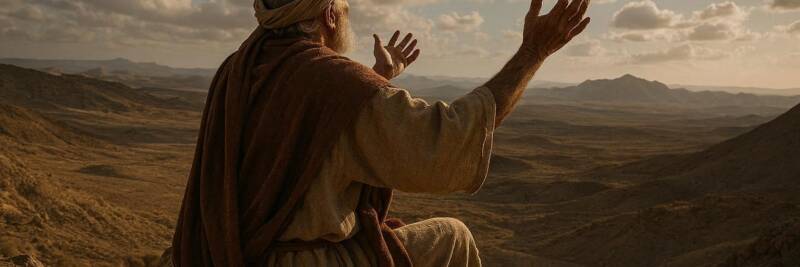
However, according to Rabbi Sacks, in the story of Sodom, the main theme shifts from individuality to justice. In his article, “Answering The Call,” he shows the passage in which G-d chooses to consult Avraham. According to Sacks’ analysis, “Those words, ‘Shall I hide from Avraham what I am about to do?’ are a clear hint that God wants Abraham to respond; otherwise, why would He have said them?” Furthermore, he claims that G-d invited Avraham to protest so he could act as an example for future generations. Avraham showed the courage to challenge the ultimate ruler, God, when he felt a moral responsibility, so that his descendants would have the bravery to challenge unscrupulous leaders. He wants Avraham to respond and be the first of mankind to possess collective responsibility. This is not an act of disrespect but rather a presentation of admirable moral strength. As explicitly stated in Sacks’ book, Radical Then, Radical Now, “Judaism begins not in wonder that the world is, but in protest that the world is not as it ought to be. It is in that cry, that sacred discontent, that Abraham’s journey begins.” The story of Sodom exists to highlight collective responsibility, or, as said in the wise words of Rabbi Sacks, “society is what we make of it.” (The Home We Build Together, pp. 123-124)
While I do agree with Sacks about our responsibility as humans to care for each other while deliberately having faith in good, I would like to suggest another possible point of comparison between the two stories. Prior to Avraham’s existence, we have witnessed multiple tales in which people have failed to assume responsibility. For example, the very first people in the world, Adam and Eve, each blamed the other for their misdoings in the Garden of Eden. Later, their son Cain was made famous for his line, “Am I my brother’s keeper?” (Bereishit 4:9), which he used to renounce his responsibility for murdering his brother.
All these stories clearly present that G-d wished for mankind to take collective accountability for the actions of themselves and others, which is precisely what Avraham does in the story of Sodom. Hence, we understand that in both instances Avraham is merely fulfilling the will of G-d: in the Akeda, Avraham respects G-d’s ownership over his son, choosing to trust His promises, and in the story of Sodom Avraham recognizes and executes G-d’s wish for humans to take care of each other.
This duality in Judaism, the ability to understand where you must trust G-d’s will and where you should protest against your current reality, remains highly relevant also today. For example, in the October 7th war, the people of Israel, and Jewish people as a whole, had to fight back against the injustice done to them by the wicked terrorists of Hamas; we could not stay silent and believe our fate is doomed, exactly like Avraham could not peacefully sit and see innocent people being harmed in Sodom.
Personally, I volunteered in an organisation that taught me about Israeli advocacy in the world, allowing me to support my country in a way that is feasible for me. However, as individuals, many of us could not directly act to combat the horrors committed. When I would come home from our 3-hour-long meetings at the association, I felt just as drained and scared as any other Jew at the time. But I decided to take upon myself the ability to trust G-d, just like Avraham did.
G-d promised Avraham that his descendants would be uncountable, just as He promised us the land of Israel, and just as G-d fulfilled His promise to Avraham, we had to maintain the belief that He would do so now, too.
Read the other prize-winning essays from the 2026 Contest
- Finding God in Tragedy by Micah Jackson (First place)
- Engaging in Judaism and the Modern World, Without Losing Identity by Leah Rebibo (Second place)
- When and Why We Question by Aria Knepler-Pearl (joint Third place)
- Judaism and the Modern World – Engaging Without Losing Identity by Nitsan Winter (joint Third place)