

Share
On Monday 24th November 2025, the fifth annual Sacks Conversation was held at a St. John's Wood Synagogue, London at 8:00pm.
Rachel Goldberg-Polin and Jon Polin, (the parents of Hersh Goldberg-Polin z”l) were in conversation with Daniel Taub. This event - in the presence of Chief Rabbi Sir Ephraim Mirvis - marked the launch of The Conrad Morris Edition Koren Sacks Humash with translation and commentary by Rabbi Lord Jonathan Sacks. It was also part of the events held to honour the fifth yahrzeit of Rabbi Sacks.
Dayan Ivan Binstock: Good evening, Beruchim HaBaim, Chief Rabbi, Lady Elaine Sacks, members of the Sacks family, members of the Morris family, our special guests, Rachel Goldberg Polin and Jon Polin. What an honour it is to have you with us. Ambassador Daniel Taub, Mr. Saul Taylor, President of the United Synagogue, Dayanim, Rabbanim, ladies and gentlemen.
On behalf of St. John's Wood Shul, it gives me great pleasure and honour to welcome you all here this evening to this Sacks Conversation and the launch of the Conrad Morris edition of the Koren Sacks Chumash, with translation and commentary by Rabbi Lord Jonathan Sacks zt”l.
It is particularly apt that this event is taking place right here in this very space. Some of the ideas expressed in the commentary were first heard from this shul's pulpit when Rabbi Sacks electrified us with both his oratory and his insights.
It is also particularly appropriate because Conrad Morris z”l worked indefatigably for the community and Israel, was a stalwart of this shul before he made Aliyah to continue his work there. Of course, we extend our good wishes to Ruth Morris, SheTibadel LeChaim tovim veArukim, and David and ... grew up in this shul. And we thank you and Karine, and the entire Morris family, for sponsoring this project and ensuring that every shul in the United Synagogue has a generous allocation of the new Chumashim.
This work could not have come into existence had it not been for the outstanding work and generous effort of Matthew Miller and the entire Koren team. Their scholars have performed a superb task of gleaning from Rabbi Sacks’ writings – if we can use a word from last week's Parasha – the matamim, the choicest ideas, for us to savour in the commentary.
Rabbi Sacks’ translation is a pleasure to read. It brings the biblical text to life in a contemporary idiom that remains entirely faithful to the Hebrew original. Perhaps one of Rabbi Sacks’ greatest gifts was translation in a broader sense. He was able to translate Torah ideas into the language of the modern world, taking concepts like covenant, Brit, Areivut, responsibility and Kedusha, sanctity, and rendering them in terms that resonated with readers of all faiths and none, giving Torah a public voice capable of speaking in the marketplace of ideas without apologetics.
Equally striking was his ability to read modernity, its crises, challenges and hopes through Torah categories. He translated modern problems into the Torah's conceptual structure, showing how Jewish ideas can explain and respond to contemporary dilemmas more coherently than secular frameworks.
And whilst Rabbi Sacks was a unique voice impossible to replicate, he remains a model we must strive to emulate. The Sacks Legacy Foundation is doing outstanding work in fostering scholars and programmes to carry forward his teachings.
And so, with great respect and affection, it gives me enormous pleasure to invite Lady Elaine Sacks, Jonathan's life partner in all his endeavours, to address us. Thank you.
Lady Elaine Sacks:
Well, here we are in St. John's Wood Shul. Of course, we lived here in St. John's Wood for many years and this was our local shul and I'd forgotten how very, very big it is. Of course, I used to sit over there and here I am almost in the pulpit. Next time I'll be giving the sermon. Time moves on.
So much has been happening in the publishing world for us, and we owe so much to Koren for bringing out the compilations and translations of the works of Rabbi Sacks. I must tell you, just 10 minutes ago I was given two new copies of a translation into French.
I mean, they just keep coming. I'm especially moved when I hear Israelis quoting him, now works are translated into Hebrew. An enormous thank you to Matthew Miller of course, of Koren, and his associates for making all this happen.
This evening, of course, marks the launch of the Sacks Chumash. All our family have felt a great thrill coming into shul over the Chagim and seeing rows of Sacks Chumashim the shelves and having page numbers called out along with the more traditional text.
A very big thank you to the Morris family, who have given so much support to this publication, in memory of the late Conrad Morris.
This evening looks to be a most fascinating and moving occasion. Thank you all so much for joining us here this evening.
Thank you.
Film clip
Rabbi Sacks: Our, beloved Conrad, zichro Iivracha. For all of us, I think we feel his loss intensely and personally. Conrad was always there when you needed him. Conrad was always there when the Jewish community needed him, and he was always there when Am Yisrael needed him.
Film clip
Ruth Morris: Things that make Conrad happiest are raising big sums for his favourite charity of the moment.
Lord David Wolfson z”l: At the heart, he's a philanthropist and he's a Jew. I think that is very fundamental to Conrad.
Conrad Morris z”l: It's not just what you say and daven. It's what you do. I was a child of the community. Once you go into places, institutions, like the Highgate Home, Norwood Orphanage, you are an institution.
My mission, I think, in life, even from those days, was what had been given to me, I had to give back.
Lord Wolfson: If his business is successful, he can do more philanthropic work.
Sir Trevor Chinn: Conrad is totally committed and nothing will shift him.
Rabbi She’ar Yashuv Cohen z”l: He's loyal to the values of Eretz Israel, the Holy Land, and he's working for it and donating to it and making others join in... for you.
Conrad: ...In my children and my grandchildren's life, without fail, wherever I am in the world, we find each other. And each of them receives from me the blessing, “Yesimcha Elokim keEphraim veChiMenashe...”
Rabbi Sacks: I don't think I met anyone with a stronger sense of communal duty and responsibility. His memory will continue to inspire us all. Yehi Zichro Baruch. May his memory be a blessing. Amen.
David Morris: Good evening. Chief Rabbi, Dayanim, Rabbanim, Lady Elaine, distinguished guests, friends. It is with tremendous awe and pride that I stand here tonight in this shul. I have so many memories.
I grew up here, coming to shul with my father, every Shabbat, sitting right over there. It is here that I had my Bar Mitzvah. It is here that my mother and father were members for over 45 years until they made Aliyah. This is the place where I found my love for prayer, for leining. In fact, all my early Jewish experiences. Children's services, Bnei Akiva, Cheder, the Kiddush Club. I heard and learned from multiple Rabbanim and Chief Rabbis, including Rabbi Sacks, from that very pulpit.
So how fitting it is that we are all back here in, in St. John's Wood Synagogue, for this fantastic tribute. The launch of the Conrad Morris edition of the Sacks Chumash, to eternalize the words and wisdom of Rabbi Dr. Lord Jonathan Sacks, zt”l, in memory of our late father, zt”l.
You have already seen the film, and I can't compete with the great words of Rabbi Sacks, Rabbi She’ar Yashuv HaCohen and Lord Wolfson and Bein Chaim leChaim, my mother, and Sir Trevor Chinn.
For our family, it's a wonderful privilege to be able to do this. And we believe this is the perfect tribute to our father, who had a weekly parasha session that he would never miss. He used to use the Hertz Chumash, the standard United Synagogue issue.
But now Anglo-Jewry have new needs. Rabbi Sacks’ timeless, profound and powerful messages address the dilemmas, the difficulties and the responsibilities of being a Jew in our generation.
Our family were asked to give buildings – to name universities, schools, yeshivot, in our father's name. But for those of you who knew our father, he was not interested in property. He didn't do buildings. Apart from his family and the Land of Israel, his main love was of people, all kinds of people. He liked to help, support, back people in business, mentor people, and ensure Jewish education was available for anyone and everyone, no matter their background.
Young, old, religious, not religious, Israeli, British. And he would always take an interest in what they were doing. So we all felt that this Chumash was fitting because in the same fashion, it will, please God, be used by everyone from all walks of life. And everyone can take some wisdom from it.
I'd like to make a special mention to you Mum, Ruth Morris, who couldn't make the trip and to say thank you. Mum, we all miss you tonight. We know you're in Israel for other good reasons. (Or maybe not so good reasons.) We also know that without you, Dad would not have been half the man he was. And it was your parenting skills that got us all here to where we are today. Thank you.
Thank you, Liz and Sara Jo, my sisters, for flying out specially for the event and supporting the decision to dedicate this Chumash in Dad's memory.
To Lady Sacks, the Sacks family and the Sacks Legacy Foundation, Thank you.
We are humbled to be included in this evening honouring Rabbi Sacks memory and having the opportunity to launch the new Chumash in conjunction with the Sacks Conversation. It is especially poignant for us that Daniel Taub is chairing this conversation, a close friend and family, as well as sharing this platform with the Goldberg-Polins, who have done so much for the plight of the hostages and Am Yisrael over the last two years. You have left no stone unturned.
Thank you also for making sure the Sacks Foundation continues to be a legacy, even after the untimely passing of Rabbi Sacks, and to really push this project and make sure it's happened. And also for continuing to share your husband and your father with us all.
To Matthew Miller and all the Koren team. Matthew, we know this was a monumental task. God gave over the Torah to Moses in just 40 days. At some point, we thought we would be in the desert for the next 40 years. But your team and you were dedicated and persevered in this project to make sure that we got an awesome and spectacular Chumash in just over six years.
Thank you to the Almighty, who gave us the opportunity and the wherewithal to be able to fund this project. Please God, He will continue to bless us in good health and we will continue to give to many worthy causes and projects.
And finally to our father, Conrad Morris. Dad, you showed us the way. You gave us the education and love and means to continue in your footsteps and build on your building blocks. We are sure you are with us tonight in spirit, looking down on us and shepping nachas.
And God will continue to give us and all Am Yisrael that special beracha that you gave us children every Friday (quotes the Priestly Blessing).
May your memory be a blessing. It is my pleasure to invite our Chief Rabbi to address us all.
Chief Rabbi, Sir Ephraim Mirvis, KBE: Lady Elaine Sacks, President of the United Synagogue, distinguished guests, ladies and gentlemen. We have just read Parashat Toldot, an obvious title for this portion. The portion commences with the words “Eleh Toldot Yitzchak,” These are the generations of Yitzchak. This is what Yitzhak achieved, Yitzchak's legacy. But let's roll back just a few weeks to Parashat Noach. That portion commences with the words“Eleh Toldot Noach,”These are the generations of Noach.
So why is Noach not called Toldot? And if Noach was called Toldot, it would have made far more sense to have a portion called Yitzchak rather than Noach.
I'd like to suggest the following. Noach was primarily concerned with himself. Even though he was to become the second Adam, the parent of all humankind for all time, his prime objective was self- preservation rather than being dedicated to the people around him and those who would follow in subsequent generations.
And that's why that portion is called Noach, because it's all about him. Yitzchak, however, was devoted to being a parent of a nation, a patriarch, a role model for all time.
His prime objective was the continuity of the line through children and grandchildren who would be responsible to continue his legacy. Being a legacy person, it is only appropriate that this portion should not be called Yitzchak the Man, but rather Toldot, the long-lasting impact that he made.
Conrad Morris, z”l, led a Yitzchak-styled existence. He lived for others. He lived to give. His impact absolutely enormous, within our community here in the UK and Medinat Yisrael.
And it is so wonderful that thanks to the enormous generosity of his family, Ruth and their children, yet another avenue through which Conrad's legacy can be felt has been made possible, thanks to the marvellous Koren Sacks Chumash being dedicated in his memory.
On behalf of us all, I would like to thank the Morris family for your extraordinary generosity in enabling tens of thousands of people to benefit from your father's legacy.
Hersh Goldberg-Polin is somebody who tragically will not have physical Toldot, but right around the world, so many people have been impacted in the most inspirational way, thanks to the fact that we have read about, we have heard about, his capture, his injury, the cruel way in which he was dealt with, his murder.
So inspirational. And the result is that what we have learned about Hersh is part of the narrative of Jewish life today and will continue to be well into the future. And this is in no small measure due to his extraordinary parents, Rachel and Jon, whom we're just about to hear, people who have cried out for Hersh, for other hostages, for all of Am Yisrael during these exceptionally challenging times. And, we are so privileged tonight to be able to hear from Hersh's parents, knowing that thanks to them, Hersh's legacy, his Toldot, will be with Am Yisrael forever.
But ultimately, ladies and gentlemen, we are here this evening to pay tribute to my illustrious predecessor, Rabbi Lord Jonathan Sacks zt”l. It was here in this synagogue just over 12 years ago where he passed over the mantle of his Chief Rabbinate to me.
And in my privileged position, I feel, and I know very deeply, what a great and outstanding leader he was. We all owe, enormous Hakarat HaTov, deep gratitude, to him for everything he said, for everything that he did, for everything that, that he wrote.
And it is quite remarkable to see, well beyond his very sad passing, what an impact he continues to make. Through Lady Elaine and their wonderful family, of course, the Sacks’ have outstanding physical Toldot, but in addition, all of us are the Toldot of Rabbi Sacks zt”l.
And so it will be throughout all future times. Yehi Zichro Baruch. May the memory of this truly great man be for an eternal blessing. Amen.
Film clip
Gila Sacks: We're not just preserving something. When you preserve something, of course it fades. But rather we're seeing amazing people and educators and organisations around the world bring new light, new perspective onto his work, using it as a tool in some of the work they are trying to do, to educate, to challenge people.
Rabbi Haskel Lookstein: He is as relevant today as he was five years ago. And the world of today is different from the world of five years ago,
Dr. Erica Brown: As the world has become a less kind place, a less thoughtful place.
Jonathan Cannon: I don't know how many other Rabbis or Jewish leaders you hear the phrase “We're missing his voice right now,” in the way that you do about Rabbi Sacks. They're missing somebody who could unapologetically capture the moment and say the thing that people needed to hear.
Jonny Lipczer: He left us a treasure trove of books and broadcasts and recordings and videos.
Rabbi Jonathan Knapp: And when we read his books, we open up “Future Tense,” it looks like it was written yesterday. You can read the first two pages. It was written 20 years ago. It's so contemporary.
Ambassador Jacob J. Lew: There is a high likelihood that for a very long time to come, the things that he's written and that are being produced with things that he's written will remain very much in current circulation.
Lori Linzer: He understands human nature and just the way it connects to the human nature that we encounter in the Torah.
Gila Sacks: We would often describe Judaism as an ongoing conversation, between the voice at Sinai, that happened once and the voice between the generations, that never ended.
Dr. Tanya White: To me, that is how Rabbi Sacks saw Torah and Chochma, okay, the particularity of the Torah wisdom with the universality of the world wisdom. And he wanted it to be in constant dialogue. However that looks, at whatever time that is.
Lord Daniel Finkelstein: It's an interesting thing as we talk about the loss of Jonathan Sacks at a young age. The only person I can think of who might make sense of it is him.
Rabbi Haskel Lookstein: His words give him a measure of eternity. And the fact that posthumously, so much is being published is just a tremendous gift to the Jewish people, to world culture, and in a way, to him and to his neshama.
Ambassador Daniel Taub: I think about the phrase that we say in our Tefillot, about the words of the Torah, “ki heim chayeinu veOrech yameinu,” because they are our lives and the length of our days. And Rabbi Sacks’ days are lengthened well beyond his passing by the depth of his teaching.
Joanna Benarroch: It was very difficult to come to terms with that. He was taken from us so early.
Gila Sacks: He died in Covid, and his Levaya was 30 people and it should have been 30,000.
Dr. Erica Brown: And I think the distance made it worse, and Covid made it worse, because we couldn't be at the funeral.
David Magerman: Looking back and realising that he was not going to be coming. He was not going to be speaking to me, calling me. It was a lot to swallow. It was very, very sad for me.
Rabbi Dr. Jeremy Bruce: I felt devastated. And I wondered, oh, my gosh, who's going to replace him? What's going to be?
Joanna Benarroch: He had so much to do. He had lists of books that he still had to write, lists of things that he still needed to do in his life.
Gila Sacks: And I think what was guiding us is we kept thinking, what would Rabbi Sacks want? What would he have wanted us to focus on?
Elliot Goldstein: Rabbi Sacks was very clear, that he didn't, in his lifetime, he didn't want to have an institution, the Rabbi Sacks institution. He wanted to be a teacher, a teacher of Torah and a leader of leaders.
Dayan Ivan Binstock: His final essay was the Unfinished Journey, that Moses recognises, ‘I can't cross the Jordan.’ There are things that I'm not going to be able to do. But the challenge is, are you able to enable others to carry that journey forward for you?
Gila Sacks: So, it's an enormous blessing and privilege that we have this amazing community of people, the Legacy itself and all our trustees and supporters, and the many, many people who have got involved in its work, that they're able to take his work forward, keep it alive, and that in some ways I guess, they're an extended part of our family, which we just couldn't be more grateful for.
Elliot Goldstein: The Rabbi Sacks Legacy exists to promote the teachings and wisdom of Rabbi Sacks.
Rabbi Dr. Jeremy Bruce: Our job is to create proud, knowledgeable, engaged Jews who are going out into the world and bringing the wisdom of our tradition to humanity. And Rabbi Sacks provides us with materials. But it's our job, as the Rabbi Sacks Legacy, to inspire the Jewish world and beyond with his writings, with his ideas, because they make a difference to people's lives.
Rabbi Dr. Raphael Zarum: Instead of trying to preserve the purity and greatness of one man, one teacher, they want to take those ideas and put it in a new generation to fertilise the entire Jewish world.
Jonny Lipczer: Hardly a day goes by when people don't reach out to us to say, ‘Wow, thank you for what you're doing. Thank you for bringing these messages from the archives to us.’
Rabbi Cobi Ebrahimoff: We are working across 14 schools, delivering quality sessions of Rabbi Sacks’ Conversations, Torah Conversations on the Parasha, Covenant and Conversation, Letters to the Next Generation. At the same time, we're also working with communities across the country.
Rafi Davis: I think the Legacy’s work is incredibly important, particularly nowadays the way that the younger generation are learning, is kind of through kind of online and social media.
Joanna Benarroch: We created a new website because our website was always very active with Rabbi Sacks’ speeches and his lectures and his online offerings, and videos. And now we needed to combine everything we had, make it fully searchable so that people could mine the archive of material.
Dayan Binstock: You look at a Rabbi Sacks video of 10, 15 years ago, he's still speaking to us today. There's so much interest and, his ideas and his teachings are still continuing to excite and to nurture.
Rabbi Jonathan Knapp: Rabbi Sacks’ way of language was so captivating that he can share a huge idea in 90 seconds. And the animations, those videos, they appeal to people.
Meggie Wishogrod Fredman: There's a quote bank actually of Rabbi Sacks that many of my colleagues, that was created by Rabbi Sacks Legacy. And it's excellent. It allows you to look by different category. And I actually have a feeling that Rabbi Sacks Legacy will find an even more technologically creative way to make it even more accessible to me.
Jonathan Cannon: I'm more American-based than English-based. But the moment I say I'm working with the Rabbi Sacks Legacy, people perk up. Rabbi Sacks? Greatest Rabbi.
It's arrogant of us to think we knew him. Therefore, everyone has to know him for the next however many generations, because we know from people who didn't necessarily know him that they need him. And, when something is needed and then it's delivered, it's sustained.
Eitan Hollander: Rabbi Sacks believed that the Jewish people, and especially the Jewish State, has a purpose, and needs to fulfil the purpose of becoming connected to their Jewish identity, of being better and together and becoming a blessing to the world.
Alan Sacks: Israelis had not heard of Rabbi Sacks, and the fact that he was a Rabbi meant he was irrelevant to so many people. So we're not maintaining legacy, we're not keeping the embers alive. We are saying there is a huge emotional, cultural, spiritual gap in Israel. I don't have to explain it because it's so obvious. And there is here a core of material which is there answering.
Ambassador Taub: And we have programmes that bring Rabbi Sacks teaching here in Israel to close to 70,000 students a year. Extraordinarily creative programmes that are continuing to grow. Another area that we think is tremendously important is that post-high school period, before young people are going into the army, when they're asking themselves the big questions. We're nurturing Rabbi Sacks as an academic resource in partnership with Bar-Ilan University.
Professor Jonathan Rynhold: The Sacks Legacy helped one of Israel's major journalists produce a booklet of Rabbi Sacks’ sayings and different things he wrote that was given to hundreds of thousands of soldiers in this war. It really gave them strength at a time when we're fighting our hardest war and our longest ever war.
Here you have a voice that it doesn't matter if you're religious, you're right, you're left, it doesn't matter. It's morale boosting. It's something that everyone gets behind. Without the Legacy, that doesn't happen.
Rabbi Dr. Samuel Lebens: The fact that all of his writings are being translated into Hebrew and published and Israelis are reading them and he's starting to make an imprint over the kind of public imagination, that already is a tremendous, step forward.
Eitan Hollander: So I hope that we are building something that is going to be relevant and going to be a blessing for Israeli society and hopefully to the world.
Jonny Lipczer: When Rabbi Sacks was alive, he had a team of three and, today there's a team of 13, people all around the world bringing Rabbi Sacks’ teachings to a whole new generation.
Jonathan Cannon: We're only like a startup at the moment and already people want to partner with us, people want to work... It's like we haven't got remotely the capacity to deliver what we're already being asked for, let alone the things that we want to build on.
Rabbanit Yafit Clymer: Rabbi Sacks Legacy, I think, is one of the most important organisations in the Jewish world today, with a potential also reaching the rest of the world and interfaith relationships.
Gila Sacks: Yeah, there's a part of it that's about making sure that, you know, new generations and different parts of the world can access his work, can read his books, can, you know, get ideas from, the ideas that he taught.
But what really is exciting is to see some of that work take on a new life, so that they're not just learning from him but arguing with him, engaging in a way, finding, finding ways to take what he taught and give it new life, new relevance.
Rabbi Jonathan Knapp: I can't believe how much the Sacks Legacy has already accomplished. Their reach is incredible and what they can accomplish in the future is vitally important for the future of Diaspora Jewry and also for Israeli Jewry.
Dr. Erica Brown: I think that the Sacks Legacy is taking leadership seriously, making sure that there are young emerging scholars who will never replace Rabbi Sacks but will keep him in good company.
David Morris: Rabbi Sacks’ writings will be relevant for many decades, even possibly centuries to come. Because the way he writes, it's something which is relevant to all generations, all people and at all times.
Natan Sharansky: Of course, as long as Jewish tradition will live, his work will live. And as we know, Jewish tradition is more ancient, than any other. And that's why he has longer future than any other.
Dayan Binstock: Rabbi Sacks achieved a level whereby people call a book by the name of its, of its author.Like you say the Riff, the Rambam, and we're talking about the Sacks Siddur, the Sacks Chumash. And when you get to that sort of level, there's a measure of immortality.
Jonny Lipczer: You know, 100 years from now, we're going to have the messages not just in a written form, but in a digital form.And who knows what will be done with that as time goes on.
Alan Sacks: Rabbi Sacks answered the questions of the time. He was engaged with today, and today in 50 years, today will be today of then and his message will be the same message.But now people have to adapt it, acclimatise it to what is going on.
Gila Sacks: If his Torah can last, if it can continue to touch somebody, challenge somebody, make somebody feel brave about doing something next, that would be an amazing thing.
Rabbi Lionel Rosenfeld:
As the years go by, in decades’ time, 50 to 100 years, Rabbi Sacks will be spoken about in the same way as we speak about Rashi, and Maimonides, and Ramban, and all the great Rabbis through the centuries.
Rabbi Dr. Raphel Zarum: The year is 2120. It's 100 years since Rabbi Sacks passed away. There's no one alive left who had met him. And yet his books are on the shelves like Rav Soloveitchik, like Rav Hirsch, like Rav Kook. Not all of them have survived. Some feel more dated. But still there are teenagers and Jewish students picking up those books and saying, ‘Wait a second, this writer is speaking to me,’ because his language was so beautiful. It can transcend time.
[End of clip]
Ambassador Daniel Taub in conversation with Rachel Goldberg-Polin and Jon Polin
Ambassador Taub: Chief Rabbi, the last time I had the zechutof hearing you speak in this shul was 12 years ago at your installation, when you invited us all to "come with me" and painted an extraordinary vision of the UK Jewish community. And it is such a pleasure to come back to the UK and to see how much of that vision has become a reality. Thank you very much.
Dayan Binstock, it is very hard for me to hear you speak in this shul without seeing you throw out bars of chocolate to any children who are answering your questions on the parasha. But you have been such a gift to Zahava and myself, from our marriage throughout our lives, and a gift to this community and a gift to the whole of the Anglo-Jewish community. Thank you very much indeed.
The very, very dear Morris family. Sara Jo and Michael, Liz, David and Karine, and especially in absentia, to Ruth, who really started Conrad's journey in the Chumash. The last conversation that I had with Conrad, he was already very ill. He said to me, “You know that ambassador's residence you're living in? It's really not smart enough for the State of Israel. I'm going to get a bunch of friends together and we're going to do it up for you.”
For Conrad, living and giving were the same thing.
And he would be so extraordinarily proud to see that DNA continuing, with his love for the Chumash and his love for giving to the Jewish people, carrying on to the next generation and beyond. Thank you very much.
In years to come, perhaps in centuries to come, people will look back on this period as a Jewish “golden age” in terms of what happened in Jewish publications, both in terms of new publications and in terms of the extraordinary reimagining of the cortex of our faith.
And an incredible contribution to that has been made by Matthew Miller and the Koren team. And this Chumash is just one example of the principle of “HaYashan Yitchadesh VeheChadash Yitkadesh,” the old will be made new and the new will be made holy, in the most extraordinarily beautiful way, really a Matana LeDorot, a gift to the generations. Thank you very much indeed.
The Sacks family – Lady Elaine, Alan, all of the children. A special thanks to Gila, who has agreed to close this evening. Ein milim. There really are no words.
In Rabbi Sacks’ life, unfairly, you had to share Rabbi Sacks with a thirsty world. And since his passing, that has been no less the case. And we just want to say to you that the extraordinary and growing impact that his voice has had in the years since his passing – and I would say, especially in Israel, which was so important to him – it could not have happened without the trustees who are here. It could not have happened without the incredible team, many of whom are here. But above all, it could not have happened without your commitment and your support. Thank you very much indeed.
Rachel and Jon, I don't know if ever in Jewish history there was a couple who entered the hearts of the Jewish people in the way in which you have done.
And that was a journey that started with terrible pain, which is still with us, the pain of Hersh's capture and murder. And then as you campaigned for all of the hostages. But along the way it became something else as well. People found in your voice a voice of Judaism that was powerful and passionate and humane and inclusive.
And, you know, I think about Rabbi Sacks, his books, and maybe especially the Chumash, and Rabbi Sacks had this extraordinary gift for writing in a way that was at once deeply authentic and at the same time, incredibly relatable, accessible.
And I think in your lives, you've done something very similar, which is you represent a Judaism that is so deeply authentic and yet it is so intimately relatable that it is inspiring to all of us. Thank you so much for being with us this evening.
So I really want to start, if I can, with your incredible Jewish identities. I want to know what they put in the water in Chicago in those days that enabled you to grow up with this passionate, unique sense of your Jewish identity. Please.
Jon Polin: Well, I feel like in the UK it's appropriate now to take about 10 minutes to acknowledge lots of people and thank them. I do want to acknowledge everybody here, not one by one. We have felt, we really have felt a tremendous hug from people around the world. And that is certainly, certainly true here. And evidenced by, I can't see into the lights like a few others before me said, but I think there are a lot of people here. I'm not a soccer, football fan, but I think there might even be an Everton game tonight going on. So thank you all for being here.
I'll take a first stab at your question so that Rachel can compose herself from your opening remarks.
You asked about Chicago, where Rachel and I grew up together. I'll say that in the video, it was, I think, Lord Wolfson who said about Conrad Morris earlier in the evening, a comment that maybe many of us just kind of overlooked. But he said he was a Jew at his core. And then he went on and there was a lot of other praise, but I kind of feel not to compare myself to Conrad Morris, but I grew up with Judaism just at my core. And what I mean is I grew up in Chicago in what would be called a modern Orthodox home.
Yet within that, I sometimes joke that I might have walked through more diverse Jewish circles in my life than almost anybody else I know, which is to say I went to an Orthodox day school from kindergarten through the end of 12th grade.
As a kid, we went to something that I think was maybe a distinctly Chicago concept called traditional synagogue, which was full tefilla, but men and women sat together and there was a microphone in the synagogue.
And then we moved to a more standard Orthodox shul. But within going to these Orthodox schools, I also worked for several summers at Camp Ramah, which is through the Conservative movement. In college, I had five roommates. Out of the six of us, I was the only one who kept kosher. We had two kitchens in our home, a kosher kitchen and the kitchen for everybody else.
And we then continued that with our own kids, even once we moved to Israel. As just a couple of examples, there's a United States summer programme that sends kids through the US Reform movement to Israel for a summer, and they take two Israeli kids to put them on each bus.
And we encouraged our kids to go and do that, and they did that. And then Hersh, after the army, worked as a counsellor for a, community day school from the United States. And we've lived what I'll define as a modern Orthodox lifestyle, but always walked comfortably in so many worlds.
And so certainly in the Jewish world, it has just always felt comfortable to me. It feels comfortable to me now that we get embraced by so many people and we speak in all kinds of synagogues, all kinds of Jewish organisational environments.
And, I think that just growing up in that, growing up, seeing the Jewish and Zionist magazines and publications all over my house, just made me feel Jewish to my core. And my life experience made me comfortable in all circles, in ways that I've only come to realise are maybe rare.
Rachel: I actually had a very different childhood upbringing than Jon. I wasn't blessed to grow up in a home that was Jewishly literate, Jewishly observant, but we were very proud of Israel. That was kind of how we identified, Jewishly. We were believers in Israel. We were Zionists. And yet, I also remember distinctly both my mother and my grandmother. If we were ever somewhere where we would see someone who looked very religious, they would say – and especially my grandmother would say – isn't that wonderful that those people are keeping our heritage alive and our traditions alive.
And I actually grew up really feeling that because there was no tension. There was no, we're different than they are. It was, that's great. They're carrying that for us. And so when I started to become more observant, when I started to go to an Orthodox day school, where I met a boy who was my height – I'm still that height. He moved on, height-wise – I always felt embraced and appreciative of the diversity within the Jewish community.
And so, in this arduous odyssey that we found ourselves in these past two years, something that's been so, so supportive and scaffolding to us has been the vibrancy of communities that have reached out to us to the point where there are communities in Israel that are Charedi, Charedi communities, the ultra-Orthodox communities... there was one Rabbi that Jon went to see in Bnei Brak, and the Rabbi actually said, “You can bring your wife back. I don't meet with women, but I will meet you and your wife.”
And we had to do this really interesting sort of choreography and production, where he and Jon sat next to each other and I sat – and I was the only one else in the entire room – and I was at the end of the table, like in Downton Abbey. And yet he was asking questions. And he would ask Jon a question, and I was supposed to answer it, and I... but he would look at Jon and then he would say, “She's saying.” And he would... It was like Rabbi Hillel and Rabbi [Shammai]... you know, like, making sure that he was saying it properly.
And that was really beautiful. That was really an embrace. And I think that that's something that this horrible situation that we've all been through since October 7th, it did really unite us in many ways that are so horrible. And the word united is so overused. But the fact that we were getting embraced from this wide swath also speaks to the symbiotic relationship that we both had, as children, toward the diverse Jewish community at large.
Ambassador Taub: Well, so this evening we are marking this incredibly significant launch of the Sacks Chumash. And the Chumash, of course, is both the most universal of texts and it's the most personal of texts. We heard Rabbi Sacks in the film, in the introduction, saying, ‘We don't merely read the Torah. We bring it to our time, we bring it to our lives. It meets us where we are.’
I remember one of my kids, when they were in junior school, they came home and he said to me, “Abba, you know how much Moses wanted to go into the Land of Israel?”
I said, “Yes.”
He said, “He really, really wanted to go into the Land of Israel.”
And I'm feeling proud of him. I said, “Yes.”
And then he said, “Well, that's how much I want a PlayStation!”
So the Torah meets us where we are.
And what I wanted to ask you, as impossible as it is, if you could think of a verse or a passage or a theme from the Chumash that meets you where you are, that speaks to you, that gives you strength, or maybe that you've come to see differently?
Jon: So, I was listening to Rabbi Sacks talk about Kriyat HaTorah as just a reading of the Torah. But what we're really doing is, as you said, kind of going deeper and immersing ourselves. I think that for too long I was doing the Kriyat HaTorah, but it was actually Rabbi Sacks who helped me to go deeper into the reading, going back a number of years.
One such place that strikes me is... one of the few themes of my thinking and digesting kind of what we've just lived through for the last two years, is leadership. And as such, I'm struck more recently in reading the Torah about incidents of leadership from people who aren't the big names – Avraham, Yitzchak, Yaakov, Moshe... and people who just demonstrated leadership, grabbed and demonstrated it. And two instances strike me.
One is Nachshon Ben Aminadav. As we know. Bnei Yisrael gets to the sea. They're being chased. Moshe is panicking and praying and trying to figure out what to do. And it's Nachshon Ben Aminadav who just walks into the water not knowing what was going to happen. And Midrashim tell us that that led to the splitting of the sea and so on.
But he didn't ask for permission.
He didn't seek anything. He just did.
And the second example, similarly, that strikes me now as courageous leadership, going against the grain, is the story of the 12 spies going into the Land. And it was two, Yehoshua and Caleb, who, in the face of 10 others talking about the giants and the risks and all the things that could go wrong, that just stood up and said, ‘We can do this.’
And those two examples of leadership in the face of everything going on around them is something that I now, in rereading, don't just gloss over it as, oh, that was brave. But understanding the level of courage it takes to be that kind of leader and just grab leadership and do something is something that really now, in my newer reading, inspires me.
Rachel: There are so many ways to answer this. One of the things that Jon and I were talking about recently is how when we were growing up, the way that when we heard stories from the Chumash, it was always with the eye toward how heroic these Imahot and Avot were. And only recently, which is sort of embarrassing to admit, do I realise everyone was completely flawed. We teach our children these wonderful attributes because, of course, they were human. So they did all have great attributes. But starting from the very beginning, it's crisis after crisis, it's pandemonium, it's puzzlement, it's befuddling, it's confusing. I mean, literally starting with Adam saying, ‘It was her,’ right? Eve, being framed by the way, Eve saying, ‘No, it was him.’ You know, just continue going down to. Was it Noah? Was it Nimrod? Was it, you know, I mean, Avraham, Yitzchak, Yaakov, all the brothers, Yosef, Moshe, Aaron, Miriam, everybody has all these flaws.
And there's something about that that's actually very validating. And it also makes it understandable why we continue to be able to go back and to keep teasing out more and more, otherwise it wouldn't really make sense.
But that's a little bit of a tangent. I think what I would answer when you say is there's something specific that you read differently now?
I really, for many years, I've loved the tiny little part in Devarim, when it says, ‘I'm giving you today the choice, people, life and death. But I am telling you to choose life.’ I am telling you to choose life.
And you know what? Jon and I have been going through and gone through, and our people in the nation and all of us, we could just live, or we could really choose this layered, textured life of pshat and drash and remez and sod.
And I think that now I look at it so differently, and I was – we were in Washington last week, and I was speaking to a crowd of non-Jewish people – and I said, you know, I can live, and I'm going to choose to live. And I am not going to be ugly. I'm not going to let what happened turn me ugly. And that's choosing life. And I choose life differently now.
Ambassador Taub: So Rabbi Sacks wrote one book called “Not in God's Name,” in which he addressed the challenge of religious fundamentalism. And there's an extraordinary section in that book, I think, quite a courageous section for a rabbi to write, where he writes about what he calls “hard texts,” texts in the Chumash or in the Tanach that are difficult for us, that rub up against our sensitivities, that make us feel uncomfortable, and what is our obligation in relation to those texts.
And, I'll give you both a joker to pass on this question if you want, but I'm just wondering if there are passages or elements of the Chumash that do challenge you, that you do find difficult?
Jon: So one that I find difficult is actually one that in many ways sounds so simple. And it's the concept of ayin tachat ayin, an eye for an eye. It seems simple, in the interpretation of Rabbi Sacks and others that we don't literally mean it, but we mean the value. It all sounds really simple and it makes sense for a system of justice.
But something that I've learned along this path is how personal, almost unique, justice is. And I can give a couple of examples.
We were driving out of Motzai Shabbat maybe nine months ago, and we got a phone call. And on the phone were people from the military in Israel and the Shin Bet and the FBI, whole group of people on the call, and they were calling to tell us that they had killed the terrorists who oversaw the bomb shelter activities from which Hersh was taken.
And our reaction was parev, just kind of non-reactive. And I know others, many others, that we've met along this path, who they want to hear that justice has been meted out. And when they got that kind of phone call, they really, it was important to them. And I'm not comparing it, I'm not at all critiquing. I totally understand. But, it hammers home for me just how complex that seemingly simple concept of ayin tachat ayin, an eye for an eye, is. To the point where after 9/11 in the US there was a lawyer in Washington named Ken Feinberg, who was assigned to basically figure out how to oversee justice for victims of 9/11. I happen to know Ken, and of course, that seems like an impossible task.
But I've lately been saying, I want to go for coffee with Ken and really understand what he was going through in trying to take on that challenge of justice.
Ambassador Taub: Thank you.
Rachel: I think the theme, for me, that is complicated because, I mean, we could go all night talking about different problematic texts. So many come to mind. I'm sure everyone's thinking of their own, and you should stay up late and talk to someone about that.
But something that I find fascinating when I'm reading the Chumash is how we always say, ‘How are they so dismissive?’ Holiness was raining down all the time. I mean, especially for me, the entire journey in the desert I find fascinating for so many different reasons. But they had Starbucks falling on them three times a day from the sky, and it was hot, and they were still kvetching.
And the truth is, throughout all of Chumash, there's this phenomenon, right, that going back again to Bereishit, to the lack of acknowledgment of holiness in life. And we have it today, we struggle with it today, and yet there's nothing new under the sun. Because... and I've had many people, in my years, you know, we divide life now into the before and the after. So in the before, when I was teaching a lot, and I would talk to young people who would say, ‘Well, if you just prove that there's God, then I'll believe.’
And I was like, ‘People, that's not how it works.’ That's the whole point. That there's beauty in not having the proof. That is what belief is. It's this leap.
And I find in the Torah, those are the difficult pieces... the pieces where people aren't... It's right in front of you. Hashem is standing in front of you. Your face is turning red because Hashem is right there and you're still doubting. And that, to me, are the texts that are the most juicy.
Ambassador Taub: Amazing. Thank you so much.
So you will have seen in the film that, the interest in the teaching of Rabbi Sacks over the last five years has been extraordinary and growing, and it finds expression in all sorts of ways, not just curriculum, but in podcasts and in online courses, and there's over a million users in Israel on the social media and so on.
But, one of the things that people who want to partner with us and approach us often ask for is, can you not make a kind of ‘hologramic avatar’ of Rabbi Sacks, that we can ask questions of and get answers.
And I feel like saying we're about to launch. But the answer is, we are not about to launch. And it's not something that we're going to do, for all sorts of reasons.
But I think one of the reasons is there is a very special power to an unanswered question.
And so, in that spirit, I would like to ask you, if you could ask Rabbi Sacks a question, what would it be?
Rachel: Well, I'll leave Jon with the really deep and meaningful question. And I think that if we're playing the “What if?” game, I would ask Rabbi Sacks if he's found Hersh there and if he would teach him some of what he's taught me.
Ambassador Taub: Can I just say on that? One of the things that has been so moving to us is hearing from so many of the hostages of the gift that Hersh gave them, even when he met, just for a brief while. And, particularly this quotation from Viktor Frankl, “He who has a why to live can bear almost any how.” And hearing you speak, what strikes me is less that incredible sentence and more that capacity of a young man to take a text and turn it into a life.
And I think we can see a glimpse of where he got that extraordinary gift from.
Jon?
Jon: It's oftentimes particularly challenging to jump in after Rachel has just pulled out some line like that. I'm thinking, what am I supposed to do from here?
I mentioned that there are a few themes to my thinking, one of which is leadership. So I'm going to kind of stick with that thread for a minute. And I actually, I apologise to a few people who heard me earlier tonight talk about this concept that I'm about to mention.
But Rachel and I have seen the best in humanity in the last two years from people like the people in this room. People all over the world. And by the way, not only Jewish people. People all over the world have strengthened us and lifted us up and supported us.
But I've also seen some disappointment in people. And some of that, unfortunately, is from people of influence, leaders. And specifically, when I think about it, we had opportunities to sit in rooms with people who were compassionate and empathetic and kind, and ultimately, they weren't able to do anything to help us.
And I think that describes a lot of leaders. That they're kind but ineffective. And then I see leaders who I think are tough and get stuff done, but they lack kindness and compassion.
And knowing that Rabbi Sacks has written a lot about leadership – I went through an entire Torah cycle reading his ‘Leadership through the Parsha,’ [“Lessons in Leadership”] every week – I would ask him, how could he teach world leaders to find that balance of compassion, but being tough and knowing how to pull from each as appropriate to still be effective leaders?
Ambassador Taub: Thank you.
So, as, this audience and many other audiences testify, you have been an incredible voice of Israel, or mediator of Israel, to the wider Jewish world. But I think in a way, you've also been something of a mediator of a kind of World Jewry's Judaism to Israelis. And I was struck by a beautiful article written by a Rabbi in Jerusalem, Mishael Tzion, who talked about the fact that he went to be interviewed in a TV studio and the producer couldn't quite figure him out and said, “What kind of Jew are you?”
And he writes, “Confused and a little annoyed by the worn-out question, and without giving it too much thought, I answered, ‘You've heard of Hersh's parents, Rachel and Jon from Jerusalem? So I'm religious like them.’ And from the look on her face, I immediately felt she understood.”
And then he goes on to say, “What kind of Yiddishkeit have they rekindled? A Yiddishkeit that has a covenant with people of sincere faith from all religions. A Yiddishkeit that insists on walking in this world with emuna, faith in God, and faith in human beings. A Yiddishkeit rooted in the weekly Torah portion and in the Jewish calendar at every moment, finding in them universal lessons.”
But I think there's something else about a kind of Judaism that isn't the norm in Israel that people have sensed through you, and that is the role of community. And you come from, very, very special community in South Jerusalem. And I wanted to ask you just to share with us a little about the community and the role that it's played for you over these two years.
Jon: I learned to go before Rachel on some of these answers.
So we are indeed part of a special community. And I would define that community as our neighbours, our friends, kind of the whole of South Jerusalem. But maybe specifically what you mean is our shul community, our synagogue community.
We belong to a smallish synagogue community called Hakhel. And I'm thinking about some Rabbi Sacks teachings. And I guess, you know, in the same way that you don't talk about your favourite children, it's hard for me to say a favourite teaching that I've heard from Rabbi Sacks, but one that really resonates with me is he talks about Parashat Vayakhel after the Golden Calf, and talks about Moshe comes down and sees the disparate people and realises he's got to bring them together.
And he does, “Vayakhel,” or Hakhel, like our community. And Rabbi Sacks specifically talks about the importance of two things that Moshe tasked the people with. One was building a Mishkan and the second was keeping Shabbat. And I think so much about those elements with our Hakhel community, because the building of the Mishkan was something that was a mission, a task that they took on and came together as a people to do.
And that is exactly what we felt and witnessed from our Hakhel community around Hersh, initially. The entire community, from literally October 7th in the afternoon and then never leaving our side, just seemed to always predict what we needed.
When we needed an evening of tefilla and song, they were ready to provide it. When we needed them to, whatever it was, they were there. And it extended beyond Hersh. It very quickly extended to all of the hostages. And it wasn't just for Rachel and for me, but it was, I think, for a much broader community. As Rav Mishael Tzion mentions, the Hakhel community was pivotal in starting regular tefillot at the hostage tent, the Ma’ahal, in Jerusalem.
Every Shabbat, every chag, people walking, organising, leading tefillot. At some point, the community organised something called Mishmeret 101, a Shomer Shabbat version. This is a group that would gather regularly during the week around the country. And they started a group doing it on Shabbat, just gathered in song and prayer in a meeting point on a corner in Jerusalem, that extended to all of the communities, all of South Jerusalem. But they just took on such a leadership role to the point where I'm so proud how many people around the country, like that newscaster, want to talk to us about this little minyan.
I actually oftentimes say if we could just replace all 120 members of Knesset with 120 members of our community, we'd be a much better country and a much better world.
So I could talk a lot longer about them and the Shabbat components, which I didn't even touch on, but, tremendous Hakarat HaTov, gratitude and blessing that we are part of such incredible people still to this day, supporting us.
Rachel: I'll add on to that that we always say that there are 36 Lamed Vavnikim that were on the shoulders of these people, and that's why the world exists. But I am telling you that all 36 of them are in our shul.
And what's amazing is that they're the quiet ones. They're not the ones who are standing up, who are the Gabbais and who are leading everything. It's these quiet people who have taught me how to be human. Really human, really real mensches, not the mensches that I thought that I was striving to be.
And, I think in particular of two very quiet women who... they do all of this secret, magnificent work that keeps the world spinning.
And every so often, I'll be driving at night and I'll pass a corner, Tzomet Oranim, which is sort of a corner. It's not really such an exciting corner. And I'll see one or two of them there with a yellow flag.
They're not making any noise.
They're just standing there.
And they remind me of this man who... His name was A.J. Muste. And he. During the Vietnam War, he was an educator. He was just a schoolteacher, but he made sure to go stand in front of the White House with his little homemade sign that said, “Stop this War.” And after eight years, a journalist came over and said to, him, “Do you really think that holding that sign is going to change the world?”
And he said, “Oh, no. I hold the sign so the world doesn't change me.”
And I think it says everything. That's what that minyan is doing. They stand and they do so that they don't forget who they are.
And it's such a powerful and palpable and remarkable lesson in how it means to walk through the world as a person.
Ambassador Taub: So, when you travel around the world, you have, as you've mentioned, met a lot of people in leadership positions, but you've also met a lot of young people. And I'm thinking about young Jewish people outside of Israel today. The age of Hersh and Orly and Leebie, and a lot of them are actually now finding it much harder to feel about Israel the way that both of you did when you grew up, to connect with Israel, to feel that passion. And some of them are feeling not just disconnected, but even more distanced than that. And I'm wondering what you do say to them or what you would say to them?
Rachel: Well, I find it very strange that everyone seems to be okay with the idea – I'll speak from an American perspective – that not everyone voted for the last administration and not everyone voted for the current administration. And yet you can still be a proud American. Part of being in an aspiring democracy means you don't always choose who is currently living in the White House. And you can still be proud of who you are and what your country stands for in theory.
And I think that happens in the UK. It certainly happens in Israel in the parliamentary system. You didn't always vote in the person who is currently living at 10 Downing. What's it called? Yeah, okay. I'm trying to sound like the locals, with my accent, and I think that it's a strange double standard that we think somehow, that every single thing, whoever's running the show, is doing is in the name of everybody.
And that goes for always. I'm not trying to make a judgement on anyone in particular, but I think when we speak to young people and they start to speak in sweeping generalisations – which is always fun because you don't have to think when you do that – I think that it's unfair to assume somehow that that Israel is held by a different standard and that somehow every single thing that happens in Israel has been chosen by every single person who lives in Israel.
And that is not the case anywhere else on planet Earth, specifically in aspiring democracies.
So I would challenge those young people to try to expand their thinking and be more gracious to Israel, along with whatever other countries and the measuring stick that they're using.
Ambassador Taub: Thank you.
Jon: I want to share an anecdote that I'm going to do hesitantly, but I think there's a lesson in this. Two months ago, three months ago, in August, Rachel and I had our first quiet, anonymous week in two years.
A friend of ours has a home on the coast of Oregon, the west coast of the United States, in a quiet little beach town, and invited us, and we went for a week in August. One day, we went into a little tiny coffee shop in this town on the coast of Oregon, and we walk into the coffee shop and the barista is wearing a large pin, “From the River to the Sea.”
And Rachel right away said to me, “Do not engage with him!”
So I don't.
But we're drinking our coffee, and then suddenly I look over, and our friend is up talking to this barista. And we're just a few feet away. So I'm kind of hearing him go through the litany, of this UN resolution and this piece of history and so on.
And they're having a conversation. And then Rachel gets up, and she goes over to the barista, and she sticks out her hand. In a moment of not being shomer negiya, the barista sticks his hand into Rachel's, and she says, “What's your name?”
And he says, “My name is Jake.”
And she says, “Jake, I'm Rachel, and I just want to show you.” And she pulls out a picture of Hersh, and she says, “This is Hersh. He was a real advocate for peace and for coexistence.”
And Jake said, “Right on!”
And then Rachel said, “He was taken from a music festival by Hamas, held captive for 328 days and then executed.”
And I'm looking, and there's this pause in a moment where they're still holding hands.
And I think, there are no cameras, no social pressure. It's just two human beings looking eye to eye, having a conversation.
And I'm waiting, and Jake pauses for a minute, and he says, “Well, if you guys didn't commit genocide...” and he starts launching into an attack.
And it was actually educational for me because I'm all for engaging with people of an array of opinions, including about Israel. You want to be critical of Israel. I'm also critical. We could talk. But when you have lack of humanity, when you fail to take a moment to just say, “I'm sorry for your loss,” or show any level of humanity, then I think there's really nothing to talk about.
And unfortunately, I think there's a lot of that out there that young people are facing on university campuses and college campuses.
And there's a time. There's a time to engage, but there's also a time to do as Rabbi Sacks has said, which is sometimes when people look down on us, our, only response is to hold our heads up even higher so that they need to look us in the face to see us.
That's the response.
We just need to be proud of who we are and not engage in conversations that aren't going to go anywhere and not let anybody bring us down.
Ambassador Taub: Hearing you speak reminded me that there's a saying amongst diplomats, “You can change my opinions, but you can't change my instructions.” And if you find yourself dealing with somebody who is effectively acting in accordance with a set of instructions, maybe not from their government, but from their tribe or their social circle, I think you're right. I think you have to keep your dignity intact and invest your energies elsewhere.
Sadly, I think this is going to have to be our last question. But we are coming close to the festival of Chanukah. And Chanukah is a festival that offers us a range of models of gevura, of heroism, courage. You know, from the Maccabees, who had military might, to Chana, who had spiritual might, to Judith, who had all sorts of other talents and courage and so on. And you, in your journey, have met people with extraordinary courage. And so, I wanted to ask you to share with us maybe some of the types of courage that you've met, and maybe more than that, how can we nurture, that courage in our society and for a future generation that it looks like is going to need it?
Jon: I think it's interesting that you phrase it by giving different examples and types of gevura. And I think that's exactly the lesson that I've learned from this journey. And I could look at it through a few different lenses, but I'm going to focus on the lens of 251 families of hostages, or the majority of those families who we got to know in Israel.Of course, I didn't get to know the Thai families, and the Tanzanian families, and the families of all these other hostages the world conveniently forgets existed.
And something that struck me, as we were going through it, in many ways, even more now – although I remind everybody here that we do still have three hostages,so this chapter is not over – is the diversity of response to this challenge.
And that is there were families of the hostages who were, by day one or two, in the streets screaming, and they never stopped.And I think that that played an important role, for the families. But there were also families who I know who sat in their home in Ofakim in the South. Nobody ever even got to know who they are because they sat and they said Tehillim, all day, every day.
And there was everything in between.
There were screamers, there were people who just turned fully to their faith. There were people who tried to combine them. And I look at it now and think that all of it were forms of gevura and coming together in a way where the other theme was everybody fought for everybody.
Everybody said, ‘I'm in this for my loved one and 250 others.’ And they lived it. Which is to say that as people came out in November of 2023, their families came right back into the struggle. When people came out in January of 2025, their families went right back into the struggle.
And there was something about the collective, the respect that each family had for each other, that just inspired me, and continues to inspire me to believe that with all of our differences, when we come together, like in the building of the Mishkan, like our community in southeast Jerusalem, the potential for us to do something, to be productive, and do something great is so much better.
And I hope that that is something that the broader people of Israel can take from the conduct of those of us who are in this struggle deeply to bring home all of the hostages.
Rachel: I'll say a couple of things. The first is that Rabbi Sacks himself talks about the difference between strength, you know, chizuk and... or koach and gevura, right. That there's a difference between strength, which I kind of took his interpretation, meaning strength tends to be more physical, where gevura and courage tends to be something else. I actually think it's more challenging to be courageous than it is to be strong. I think sometimes our strength runs away from us, in fact.
And it's that drawing back of the strength, that is where our courage really shines. And something that I am praying that we have the courage to continue doing, all of us.
And I know that you're dealing with things that we can't even imagine here in the UK. We read about the challenges that you're having, and my heart is with you. Your heart was with us. Your heart stays with us. We feel it, we appreciate it, we know it, and we are with you, too.
This symbiosis, this symbiotic situation has woven itself around the Jewish people around the world. And I pray, and I think that it's not going to unbraid anytime soon. And the thing that I really pray for us is that we, especially now, are showered with the most rampant, unreasonable, unwieldy hope. That we have irrational, outrageous, luscious hope, because that is so intrinsically Jewish.
And that is what Rabbi Sacks always talked about.
And in his memory and in our survival mode, we have to wrap ourselves in that jacket of hope and keep going. And so, my prayer for you and for us, for all of us, for all of Am Yisrael and all Klal Yisrael, is that we have this radical, powerful hope that just like tefillin, stays around us and keeps us not just strong, but keeps us courageous.
Ambassador Taub: Before I invite Gila Sacks to close the, evening, I just want to share two thoughts. So, the first thought that I can't get out of my mind is that if it wasn't for this terrible, terrible tragedy, we, the Jewish world, the world, would never have heard your voice.
And I think there is a lesson for all of us that, that there may well be extraordinary spirits, angels, spiritual giants walking amongst us, and we just don't notice them.
And maybe there is an invitation to us here to look a little more closely, a little more generously, at the people around us, to see what hidden strengths there might be within.
And the second is a little more personal. I mentioned at the beginning, in relation to the Sacks family, that extraordinarily unfair but amazing thing that they have done by sharing Rabbi Sacks with the rest of us. And in your case, it is Kal VaChomer, that during this period, you have done a ma’ase gevura, an extraordinary act of courage, by sharing your grief and your story and your love and your hope with all of us.
So maybe I can give you a blessing that is the blessing the Rabbi Sacks would always give. It says, may you both be blessed and given strength so that you can continue to be a blessing and givers of strength to others.
Thank you very much.
We have all learnt so much tonight. All I want to do finally is to say thank you, and I do so with a full heart.
Firstly, thank you to those who shaped tonight’s event, which I know will stay with each of us here for a long time to come. Thank you to the Chief Rabbi, for honouring us with his words this evening, and for his leadership during these turbulent times. To St John's Wood Synagogue for hosting us this evening – it’s special to be back here. And in particular to Dayan Binstock, for his great support for Rabbi Sacks and input into so much of his work for many years. And to all of you for joining us
Thank you to Daniel Taub, Rachel Golberg Polin, and Jon Polin. It has been a privilege to learn from you this evening – we are truly a fortunate people to have leaders like you. With your courage, clarity of purpose, and deep, unfailing humanity, you have done so much these past years to give voice to the things most of us had no words for, and to challenge us as a people: to stand tall, stay true to our values, and to be a better version of ourselves, even when we feared we were breaking. Thank you, on behalf of all of us.
And finally, it is with deep hakarat hatov that I want to thank those who made Rabbi Sacks’ Chumash possible. To the team at Koren, and in particular to Matthew Miller for his vision and determination to bring this project to fruition. To my amazing cousin Jessica Sacks and her editorial team for the great care they took in staying true to Rabbi Sacks’ voice and intent. To the Morris family for sponsoring the UK Conrad Morris edition of the Chumash and ensuring that United Synagogue communities received copies – so that, quite amazingly, people all over our community are already using the Chumash each week in shul.
And to the professional leadership and trustees of The Sacks Legacy for the years of dedication to ensuring Rabbi Sacks’ work can continue to add something to the world. Thank you.
I will admit that I had my reservations about this project. We all knew that publishing his own Chumash was my father’s big remaining dream, and it was the project he was working on when he died. But completing that work without him, and ensuring that the content was truly all his, the voice was his, that we could stay true to his Torah – I wasn’t sure it could happen.
But of all the extraordinary and surprising things that have happened since he died, this moves me the most – that there it is, on the shul bookshelf, on people laps during davening, not just for those with the time or inclination to pick up a book of essays or download a lecture – but that his torah is there for everyone, as part of their shabbat, that my father has become part of the furniture of our Jewish life – that is a blessing beyond words. And I thank you for making it happen.
My reaction to seeing his Chumash, more than to any other of his books, had left me wondering why – why was this his dream, and why does it matter so much that this is his legacy? What is it about a torah commentary per se – he had written many many books and essays on the Torah already, and much else besides. What is different about the pages of this book – the Chumash text, and the notes along the bottom?
It was only when I was trying to explain to a colleague where I was coming tonight that I remembered, most books are not written like this – the classic model of the page of Torah or Talmud, with text at the centre and commentary alongside, on the same page. Most books, most pages, are for one voice alone. But that is not our tradition...
What does it do, what does it say, that our core texts incorporate commentary onto the same page? It is - I think – the most basic way we have of reminding ourselves that there might be multiple ways to get to the truth. Commentary is the systemisation of argument – there, on the page, is the text and the question, the voice and the counter-voice. The commentator isn’t just an explainer, simplifying down the text for the reader to understand – they are a questioner, throwing doubt or light or shade on the text, and role modelling the task for us all – because if they can bring their own voice to the text, so can I, the reader. There is never just one truth on the page – one way to read and hear the word of Torah:
Says the Psalm:
אַחַ֤ת ׀ דִּבֶּ֬ר אֱלֹהִ֗-ים שְׁתַּֽיִם־ז֥וּ שָׁמָ֑עְתִּי
One thing God spoke, and two things I heard.
Says the Talmud in Eruvin:
אֵלּוּ וָאֵלּוּ דִּבְרֵי אֱלֹה-ים חַיִּים הֵן
these and those are the word of the living God
Rabbis Sacks once said:
“…How do we explain that Judaism is a religion of argument and that argument is for us something holy? Because argument is that point in which we live a reality which does justice to more than one point of view. More than one perspective. Hence, all the arguments on the page of a Chumash. So we see them from the eyes Rashi. We see them from Rashbam, Ibn Ezra, from Ramban... we see the point of view of God engaging in the dialogue with those who represent the point of view of humanity - called Abraham, called Moses, called Jeremiah, called Job.… There is the view of Hillel. But there is also the view of Shammai. There is the view of Jacob. But there is also the point of view of Esau. There is the point of view of Adam. There is also the point of view of Eve. And, ultimately, there is the point of view of us down here and there is the point of view of God up there.
“There is always more than one perspective. And Judaism regards that as fundamental to the nature of reality. …We are seeing the world from different perspectives and Judaism wants to confer dignity on how the world looks to me and how the world looks to you.
“Judaism is an attempt to do justice to the fact that there is more than one point of view; more than one truth.”
That is not simply a lesson for us in how to learn Torah.
It is - for me - a lesson in how we are called upon to live in a world which is forgetting how to argue well. All across the world, across our news, our narratives, our wars, across our local small daily aggressions and our terrifying global threats, we see this very simple ability start to fracture. Can I make space for the possibility that someone else might have a valid perspective, even if I disagree with it? That accepting they might have their own truths doesn’t require me to doubt or diminish my own? That – as Rabbi Sacks used to put so simply – people not like me are people, like me?
As Daniel has written, and Jon and Rachel have taught us – if we cannot argue well, if we cannot make space for other people’s views and stories and their humanity, how can we ever hope to build a world in which people - and peoples - can heal and find better ways forward?
So a commentary, in one small way, is a way of saying, I have a voice and you have a voice, I might disagree with you with all my being, but come, let’s sit, let’s have a conversation, and let’s see if our truth can be enlarged as a result.
When my father died, we had no rule book for what came next. But the other day in shul, I looked up from my davening and saw two things: our youngest son Yoni, the last of Rabbi Sacks’ grandchildren, who he never met and who carries his name. And I saw a shul full of people reading the week’s parasha from my father’s Chumash. And I thought: that is a legacy.
For when all is said and done, that is what Rabbi Sacks was – a father, a sabbah, and a teacher of Torah. Baruch Hashem for that legacy, and thank you to all of you for continuing to learn from and argue with his Torah.
May it help us all to learn to argue well, and may our arguments for the sake of heaven bring us a little more peace down here on earth.
Featuring
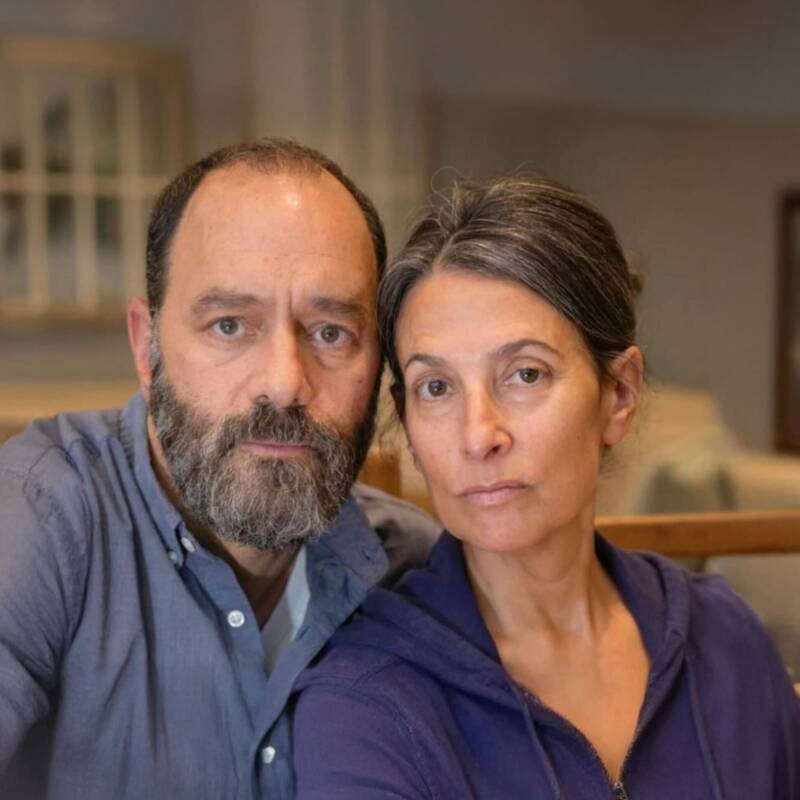
Rachel Goldberg-Polin and Jon Polin
Rachel Goldberg-Polin and Jon Polin are the parents of Hersh z”l, Leebie and Orly. Hersh Goldberg-Polin was abducted by Hamas from the Nova music festival and held hostage in Gaza for nearly 11 months. In late August 2024, he was murdered by Hamas, and his body was recovered from a tunnel in Rafah two days later.
Originally from Chicago, the family moved to Israel in 2008. Since Hersh’s capture, Rachel and Jon have devoted themselves to advocating for the hostages, becoming prominent international voices in the effort to secure their release.
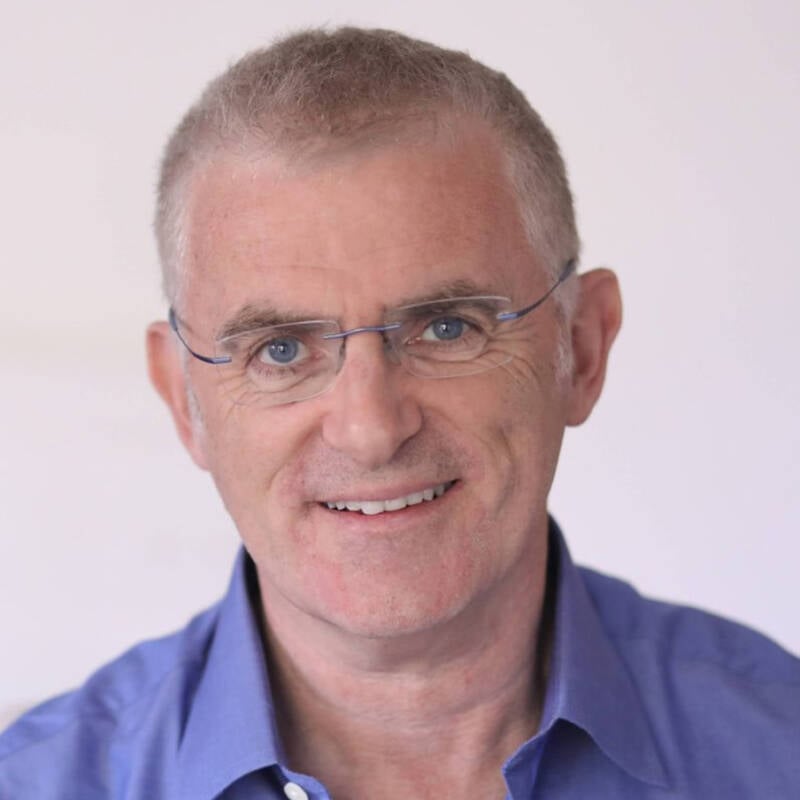
Daniel Taub
Daniel Taub is a writer and diplomat, who has represented Israel in negotiations and as Israeli Ambassador to the United Kingdom. He has served as Director of Strategy for the Yad Hanadiv (Rothschild) Foundation. He is a trustee of The Rabbi Sacks Legacy, and serves as its Chair in Israel.
Daniel has written for television and stage in Israel and in London. His book Beyond Dispute: Rediscovering the Jewish Art of Constructive Disagreement was published earlier this year.
Previous Sacks Conversations

The People of the Book
The 2024 Sacks Conversation was held at the National Library of Israel, commemorating the fourth yahrzeit and marking the dedication of the Rabbi Sacks Archive at the National Library of Israel. United States Ambassador to Israel, Jack Lew was in conversation with Rachel Sharansky Danziger.

An Interfaith Panel in Carnegie Hall
The Sacks Conversation 2023 event in Carnegie Hall in New York kept in mind the theme of To Heal A Fractured World. It showcased an interfaith panel with Cardinal Timothy Dolan, Imam Abdullah Antepli, and Rabbi Dr. Meir Soloveichik, chaired by the President of Yale University.
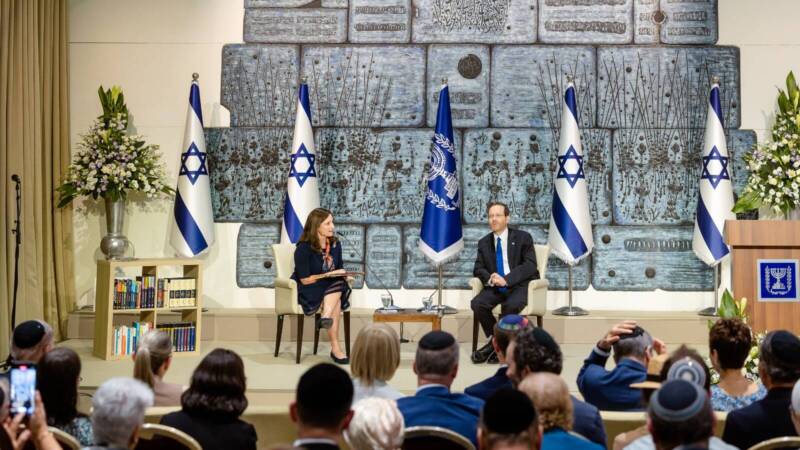
President Isaac Herzog in conversation with Dr. Erica Brown
On 13 September 2022, the second annual Sacks Conversation took place at the President’s Residence in Jerusalem between President Isaac Herzog and Dr. Erica Brown, Director of the Sacks-Herenstein Center at Yeshiva University.

Tony Blair in conversation with Matthew d’Ancona
The Rt. Hon Tony Blair and Matthew d’Ancona launched the Sacks Conversation at Spencer House, London, on 11 October 2021. They discussed the continuing impact of Rabbi Sacks’ teachings and ideas on public policy and society today.