
Chad Gadya (One Little Goat)
Family Edition

Share
Table of Contents
- Chad Gadya
- In a Nutshell
- Deep Dive
- Further Thoughts
- Questions to Think About (and Ask) at your Seder
- Experiencing the Seder
- Educational Companion
Seder Night Companion
Seder night is a highlight of the Jewish calendar for parents and children alike. It is the night that revolves around children, and parents are reminded of the importance of their role as educators. (Thankfully the Haggadah gives them lots of tools and tips!)
Rabbi Sacks zt”l explains that on the eve of the original Pesach, at the very moment when a new chapter in the life of the Jewish people began, we found out what it means to be a Jew: “About to gain their freedom, the Israelites were told that they had to become a nation of educators” (Radical Then, Radical Now, p. 32). Being a Jew means being both a student and an educator, and Seder night is our opportunity to focus on both these roles.
This educational companion to Seder night will give you some ideas and thoughts on several of the core pages from the Haggadah and how Rabbi Sacks understands them. As well as educational insights, like all Ceremony & Celebration: Family Editions, this Pesach instalment also includes activities, stories, and reflection questions in each section, designed to engage all the participants around your Seder table, young and old alike.
You will notice many extracts from Rabbi Sacks’ writings, all sourced from The Jonathan Sacks Haggadah, published by Koren. This guide is designed to be used in conjunction with a Haggadah; it is not a replacement for one.
חַד גַּדְיָא
CHAD GADYA

IN A NUTSHELL
This strange and haunting song seems simple on the surface but has hidden depths. Concluding one of Judaism’s most important evenings of the year with a children’s song tells us a lot about how important children are, especially on this night. The Jewish love of, and focus on, children means that we look forward to the future even more than we look back to the past. Just as we began the Seder with the questions of a child, so we end it with a nursery rhyme, reminding ourselves that what sustains a faith is not strength or power, but its ability to inspire successive generations of children to add their voices to their people’s song.

DEEP DIVE
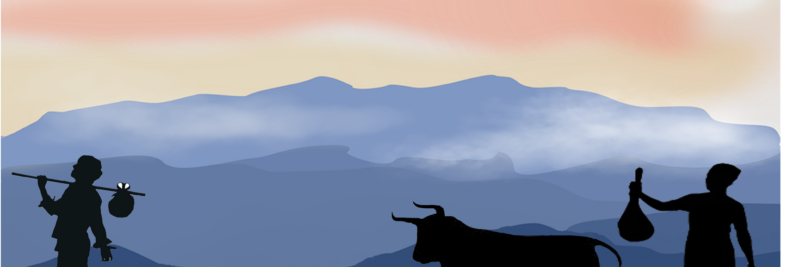
The theme of Chad Gadya is the destructive cycle of vengeance and retaliation. In one interpretation, the young goat represents Israel. The “father” who bought it for two coins is God, who redeemed Israel from Egypt through His two representatives, Moshe and Aharon. The cat is Assyria, which conquered the northern kingdom of Israel. The dog is Babylonia, which defeated the southern kingdom of Judah. The stick is Persia, which replaced Babylonia as the imperial power in the sixth century BCE. The fire is the Greeks, who defeated the Persians in the days of Alexander the Great. The water is Rome, which superseded ancient Greece. The ox is Islam, which defeated the Romans in Palestine in the seventh century. The slaughterer is Christianity – specifically the Crusaders, who fought Islam in Palestine and elsewhere, murdering Jews on the way. The Angel of Death is the Ottoman Empire, which controlled Palestine until the First World War. The song concludes with an expression of faith that “this too shall pass” and the Jewish people will return to their land. So it has been in our days.
One Little Goat,
The Jonathan Sacks Haggadah
This song, disarming in its simplicity, teaches the great truth of Jewish hope: that though many nations (symbolised by the cat, the dog, and so on) attacked Israel (the goat), each in turn has vanished into oblivion. At the end of days God will vanquish the Angel of Death and inaugurate a world of life and peace, the two great Jewish loves. Chad Gadya expresses the Jewish refusal to give up hope. Though history is full of man’s inhumanity to man – dog bites cat, stick hits dog – that is not the final verse. The Haggadah ends with the death of death in eternal life, a fitting end for the story of a people dedicated to Moshe’s great command, “Choose life” (Devarim 30:19).
Commentary on Chad Gadya,
The Jonathan Sacks Haggadah


Reflect
Living at the turn of the 21st century, do you feel this song and the message behind it is still relevant to Jewish history?

FURTHER THOUGHTS
So, having earlier expressed the Jewish hope, “Next year in Jerusalem,” we end our Seder night with the universal hope that the Angel of Death will one day be defeated by the long-overdue realisation that God is life; that worshipping God means sanctifying life; that God’s greatest command is “Choose life” (Devarim 30:19); that we bring God into the world by reciting a blessing over life.
I find it almost unbearably moving that a people that has known so much suffering can summon the moral courage to end this evening of Jewish history on a supreme note of hope, and write it into the hearts of its children in the form of a nursery rhyme, a song. For what we give our children on this night of nights is something more and greater than the bread of oppression and the taste of Jewish tears. It is a faith that in this world, with all its violence and cruelty, we can create moments of redemption, signals of transcendence, acts of transfiguring grace. No people has risked and suffered more for a more slender hope, but no hope has lifted a people higher and led it, time and again, to greatness. So we end the night with a prayer and a conviction. The prayer: “God of life, help us win a victory over the forces of death.” And the conviction? That by refusing to accept the world that is, together we can start to make the world that ought to be.”
One Little Goat,
The Jonathan Sacks Haggadah
Reflect
What is the main focus at the end of the Haggadah, and how is it different from the beginning of the Haggadah?

Questions to Think About (and Ask) at your Seder
- Why do you think we end the Seder with a song for children?
- How do you think the message of the song is connected to the Seder night?
- How does this song connect to our lives today?

Experiencing the Seder
Ask every person at your Seder table in turn to share what their hopes for the next year are: hopes for themselves, for the Jewish people, and for the world.
EDUCATIONAL COMPANION
CHAD GADYA
- The whole of the Seder is focused on children, and on transmitting our heritage to the next generation. This song (and the others at the conclusion of the Seder) are fun to sing, and also contain a strong educational message. A great way to end the Seder night journey.
- The message of Chad Gadya is that while it may seem during our history that there are powerful forces who will dominate and even destroy us, these forces come and go, and only God decides who survives in the long term. And if you consider Jewish history, it is clear that He has decided that the Jewish people have a destiny to fulfil, and therefore we have outlasted all these powerful nations who have tried to destroy us.
- Modern Jewish history reflects this same message. In the 20th century, an enemy of the Jewish people came closer than ever before to wiping them out, yet not only did the Jewish people survive, but in fact just three years later returned to their ancestral homeland, and re-established sovereignty there, and are now thriving like never before. We are part of a generation that is living the fulfilment of the message of this song.

The Ceremony & Celebration: Family Edition resources are designed for kids and students of all ages, to help them discover new insights within the Jewish festivals and to encourage dynamic discussion around your Yom Tov tables.